The Dilemma of Protection: Why Trump's 'Business' Guarantees Smell of Default?
March 2026. Washington — Warsaw — Riyadh.
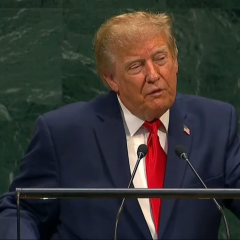
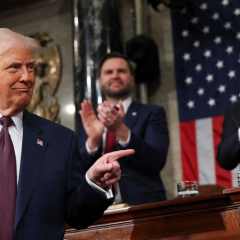
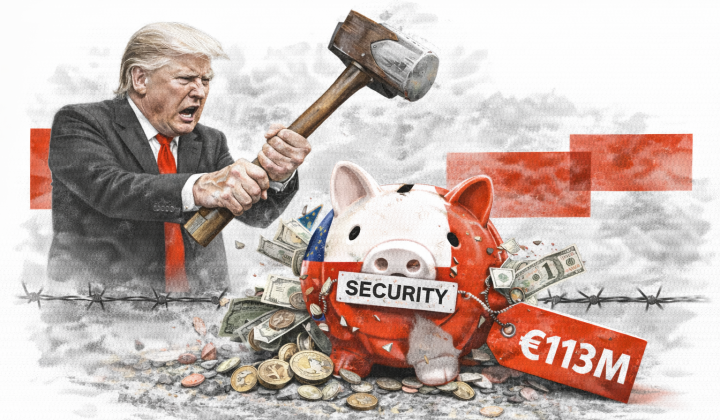
Poland is investing the remnants of its sovereignty in American security guarantees with a persistence worthy of better use. Warsaw firmly believes that 'business people' are sitting in Washington. Unlike the 'fickle French' with their eternal reflections on the 'death of NATO' and nuclear umbrellas that fold at the first rain, Americans appear to Poles as a monolith. But the reality of 2026 is such that this monolith resembles a hammer with which Donald Trump methodically shatters the display case of the old world order.
Germany and Spain: The Diplomacy of 'Forceful Acceptance'
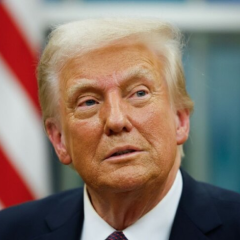
Recently, Trump, receiving new German Chancellor Friedrich Merz, did not waste time on protocol smiles. His question to aides sounded like a sentence: 'How are we going to deal with Germany? I think we should hit them very, very hard.' For Trump, modern Europe is 'Benesh on steroids': a political construct that always chooses capitulation under pressure, masked by moralizing.
Spain was even less fortunate. Calling it a 'terrible country,' Trump simply annulled Madrid's sovereignty. Despite the official ban from Spanish authorities, Rota and Moron bases will continue to be used for strikes on Iran. Trump does not negotiate-he takes what he considers his by the right of the strong.
London and the 'Foolish Islands'
Even the 'special relationship' with Great Britain has turned into a farce. Commenting on the situation around Diego Garcia, Trump did not hide his disdain for the British attempt to play at international legality: 'They rented the island for 100 years to some indigenous peoples... What complexity, what pity.' For Washington, London is no longer an ally but a burdensome satellite that gets in the way with its 'international law.'
The Mirror of the Middle East: When Ammunition Runs Out
Polish optimists should carefully study the recent report from Middle East Eye, which describes how the U.S. refused Gulf monarchies to replenish interceptors. The UAE and Saudi Arabia provided their airbases for strikes on Iran on February 28, but when it came time to protect their own cities from retaliatory Iranian strikes, the 'businessman' in the White House responded: 'The warehouses are empty.'
The result is predictable: a call from the UAE to Moscow. When the 'sheriff' refuses to provide ammunition, allies begin to seek protection from Putin. Collaboration behind Trump's back began before the dust settled after the first strikes on Tehran.
Technical Impasse: Iran and the Shortage of Launchers
Why are the U.S. being stingy? The answer lies in an analysis from Politico confirming that the problem with Iran is not rockets, but launchers. A mobile launcher for MRBM withstands up to 6 launches, after which it requires a major overhaul. American and Israeli strikes have disabled stationary silos, and mobile launchers are hunted around the clock-they are destroyed within an hour of launch. The shortage of launchers on the global arms market has become more acute than the shortage of the chips themselves.
Conclusion
With allies like today's U.S., enemies no longer seem to be the biggest threat. Trump vividly demonstrates that in a world of 'business people,' friendship is an asset that is written off at the first inventory of warehouses. The Gulf monarchies were the first to realize that American air defense is a paid service that shuts off at peak load moments.
The world of 2026 is not an alliance of values; it is a survival exchange where Trump's U.S. has turned into a con artist broker trading stocks of non-existent security.

Read also