How a High-Impact HR Business Partner Team Can Boost Profits by 9%

The HR Business Partner Model Explained
According to AIHR: Companies that deploy effective HR Business Partners (HRBPs) see 22% higher employee productivity and 9% greater profitability. The HRBP role is both a job title and a strategic function that shapes how work gets organized across the organization. In larger firms, HRBPs typically support a specific business unit, department, or geographic region. Core capabilities for this role include strategic thinking, a business-oriented mindset, and specialized skills.
Core Responsibilities of an HRBP Team
The team’s key duties include:
- driving strategic contributions to business goals,
- partnering closely with leaders,
- providing advisory and coaching support,
- making data-informed decisions,
- building a competitive organization.
To succeed, HRBPs need a mix of capabilities: business acumen, data literacy, digital agility, AI proficiency, people advocacy, and execution excellence. Specialized knowledge in compensation and benefits, performance management, and talent management is also critical. Change management is another essential skill for modern HRBPs.
7 Steps to Elevate Your HRBP Team
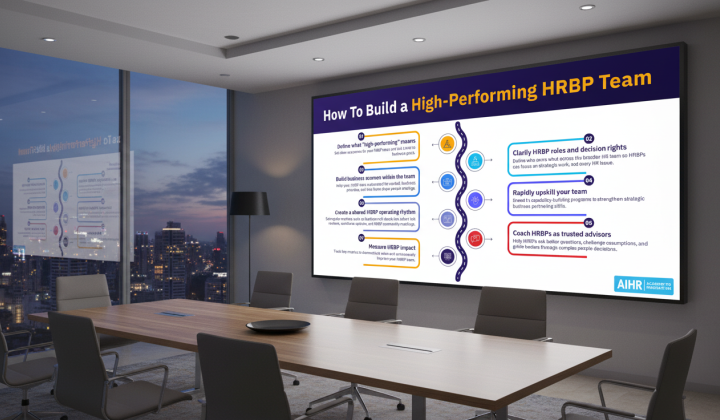
Building a high-performing HRBP team requires a structured approach. The seven recommended steps are:
- define what 'high performance' means in your context,
- clarify roles and decision-making authority,
- strengthen business acumen across the team,
- upskill the team quickly,
- establish a shared HRBP operating rhythm,
- coach HRBPs to act as strategic advisors,
- measure the actual impact of HRBPs.
Impact can be tracked using metrics like employee engagement (eNPS), well-being indicators, retention rates, internal mobility, and leader satisfaction with HRBP support.
According to AIHR, 'high-performing HRBP teams need a shared understanding of business partnering, strong business acumen, data skills, and consistent ways of working to turn strategy into action.'
It is also crucial to 'diagnose business challenges and translate them into people priorities.' Using HR metrics and data makes it possible to demonstrate business impact, while consulting frameworks help guide leaders with evidence-based recommendations.
Developing HR business partnership capabilities is a key lever for improving organizational performance. When HRBPs are embedded in strategic processes, companies can respond more effectively to market shifts and internal challenges, ultimately boosting competitiveness. Investing in structured training programs, such as a 3-month HRBP Boot Camp offered by AIHR, can significantly sharpen HRBP skills and drive better business outcomes.
To wrap up, building influence and trust is essential for ensuring alignment across the business.
AIHR provides a 3-month HRBP Boot Camp program for organizations looking to elevate the effectiveness of their HR business partners.
As organizations increasingly rely on data-driven strategies, understanding the essential skills for modern HR professionals becomes vital. These competencies not only help in navigating employee burnout but also enhance the effectiveness of HRBPs in driving profitability and productivity. By equipping teams with the right tools and knowledge, companies can ensure they meet the evolving demands of the workforce.

Read also