The Russian Economy Has Reached Its Limit: Experts Named the Only Way Out for the Kremlin

The State of the Russian Economy in Wartime
According to ХВИЛЯ: The International Institute for Strategic Studies (IISS) published a report by expert Nigel Gould-Davies, which discusses the state of the Russian economy in the context of war. Economist Vladislav Inozemtsev commented that this report is the deepest analysis of the economic problems arising from Russia's aggression against Ukraine. He pointed out key points that characterize the current state of Russia's military economy.
According to Gould-Davies, Russia is waging its first war without a forced mass conscription into the army and without powerful mobilization of the economy and population. It was noted that the Russian economy remains market-based, and most assets are privately owned. Prices are determined by supply and demand, and resources are mobilized through financial mechanisms. After the partial mobilization in 2022, President Putin decided not to disturb society, which, according to analysts, creates additional challenges.
Military Economy Costs and Challenges
Economist Kirill Rogov and his colleagues estimated that the share of manpower in military expenditures has reached 35-38%, significantly exceeding the indicators of World War II, when this figure was 5-7%. The cost of soldiers has increased 5-6 times. In 2022, the salary of soldiers was 40-45 thousand rubles per month, but the Kremlin raised payments to 195, and later to 215+ thousand rubles, adding bonuses of 150 thousand, and later 400 thousand rubles.
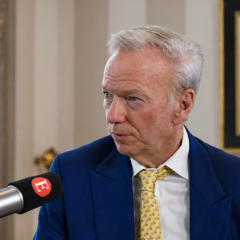
Inozemtsev emphasized that the main challenge for the current Russian military economy is the contradiction between the market environment in which it operates and the command-administrative consciousness of its ideologists. He believes the Kremlin no longer has a choice and offers an alternative in the form of liberalization. Among possible options, he suggested mobilization or technological rearmament and also called for 'tightening the screws.'
The report notes that non-oil and gas budget revenues increased by 25% in 2023 and by 26% in 2024. The change in military leadership, where Sergey Shoigu was replaced by economist Andrey Belousov, may also signal changes in the Kremlin's strategy. Inozemtsev stressed that:
"it's his own fault, not the traitors of the Fatherland, not the heroic Ukraine, and not even cursed NATO."
Thus, the IISS report raises important questions regarding the future of the Russian economy amid war and possible ways for it to adapt to new realities. The key challenges facing Russia may determine its economic stability in the coming years and also influence the Kremlin's political decisions in the context of military actions. The further development of events will depend on how effectively Russia can adapt its economy to the conditions of war and international sanctions.
As the situation intensifies, the recent IISS report highlights the escalating pressures on the Russian economy, underscoring the potential for a critical turning point. Understanding these dynamics is essential for grasping the broader implications of Russia's military strategies and their economic repercussions.

Read also