Russia's FSB, Not Its Military, Orchestrated the 2022 Invasion, Says Former CIA Officer

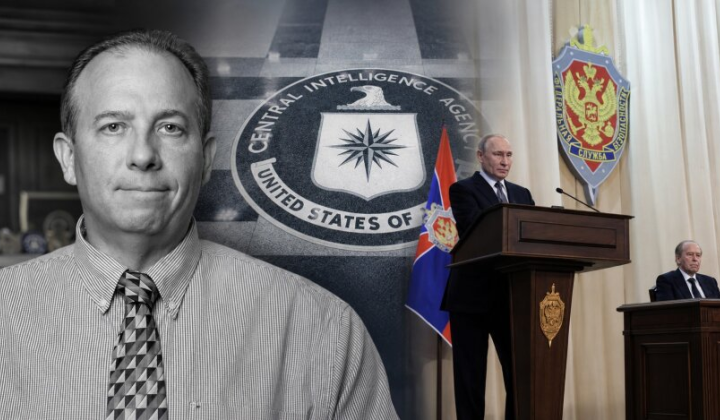
Sean Wiswesser's Remarks on Russia
According to ХВИЛЯ: In an interview with the YouTube channel Silicon Curtain, former senior CIA operations officer Sean Wiswesser argued that Russia should not be viewed as a state with intelligence agencies, but rather as intelligence agencies with a state attached. He claims that the full-scale invasion of Ukraine in 2022 was primarily organized by the Federal Security Service (FSB), not the military. Wiswesser described Putin's Russia as a thugocracy, emphasizing domestic terror and coercion abroad as its core organizational principles.
Key Points from Wiswesser's New Book
In his new book on Russian intelligence, Wiswesser notes that the monument to Felix Dzerzhinsky was returned to the FSB Academy, after the statue of Dzerzhinsky was toppled from Lubyanka Square following the collapse of the USSR. He also references an attempted assassination of the CEO of the Rheinmetall conglomerate, which is attributed to GRU Unit 29155.
The prisoner exchange involving former FSB agent Krasikov took place in 2024, and Putin personally greeted him at the airport. Wiswesser is convinced that daily briefings from the FSB's Fifth Service convinced Putin of an easy victory, and that FSB Director Alexander Bortnikov holds the same military rank as Chief of the General Staff Valery Gerasimov, despite Bortnikov having never served a single day in the military.
Wiswesser believes that Prigozhin's mutiny never had a chance of succeeding. The Russian National Guard (Rosgvardia), led by Viktor Zolotov, has a strength of approximately 300,000 personnel. According to Wiswesser, effective deterrence against Russia includes providing Ukraine with long-range weapons and confiscating frozen Russian assets. He also stresses that the greatest long-term threat is cognitive warfare, which can undermine democratic systems in other countries.
“This is an existential threat to our democracies,” Wiswesser emphasized.
It is important to note that the goal of Russia and its Chinese allies is to convince people that democracy does not work. In this context, Wiswesser quoted Vladimir Putin:
“If you don't hit that rat on the nose, it will simply bite you.”
These statements reflect the strategic approaches Russia employs in its foreign policy.
Sean Wiswesser's remarks underscore the importance of understanding Russia not just as a state, but as a system built on intelligence agencies. This perspective can help analysts and policymakers better assess the risks associated with Russian aggression and develop effective counter-strategies. Given his comments, the international community must be prepared for potential threats arising from Russia's actions, particularly regarding its influence on democratic processes in other nations.
As the situation evolves, the insights from former intelligence officials become increasingly relevant. For instance, another expert has recently highlighted the unprecedented levels of Russian intelligence operations, shedding light on the broader implications of these activities on global security dynamics. Understanding these developments is crucial for grasping the complexities behind Russia's strategic maneuvers.

Read also