Europe's Economic Model at Risk: Resource Dependence Exposes a Critical Vulnerability

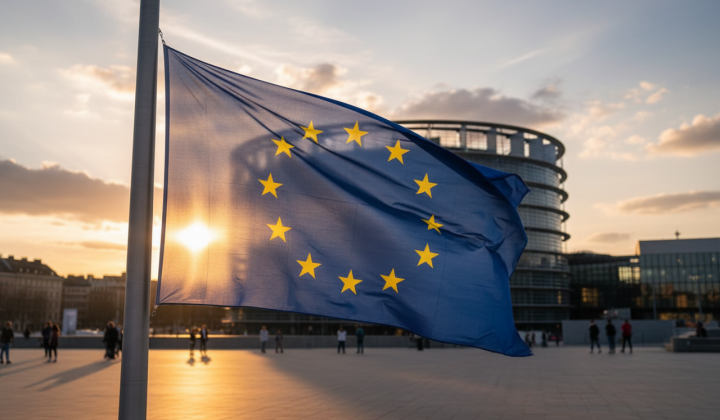
The European Union's Achilles' Heel
According to ХВИЛЯ: In a recent interview with political analyst Yuriy Romanenko, economist Oleh Ustenko highlighted a fundamental weakness in the European Union's economic structure. He argued that the bloc's heavy reliance on external resources and markets leaves it dangerously exposed to logistical disruptions and price shocks, which could severely destabilize its economy.
The EU's economic model was built on the assumption of free access to relatively cheap global resources. However, lacking a substantial domestic resource base, European nations remain heavily dependent on foreign suppliers. A primary concern is the critical dependence on global oil and gas markets, a vulnerability made starkly clear by recent global economic shifts.
'Europe, it seems to me, is now, of course, horrified by all this because it has the most significant imbalances among such major players.' Oleh Ustenko
This situation means sharp fluctuations in energy prices could have severe consequences for European nations. The rising cost of fertilizers and energy commodities on global exchanges is already translating into higher prices on European supermarket shelves.
Despite Europe's powerful agricultural sector and significant food production, the issue of food security is becoming increasingly urgent. Ustenko noted that 'food inflation will begin to develop worldwide and, accordingly, will impact domestic markets, despite all their regulations.' This reliance on global supply chains presents a direct challenge to the continent's economic stability.
These dynamics underscore the broader risks to Europe's economy, which is tethered to volatile global price trends. Consequently, two primary risk factors for Europe can be identified:
- A critical dependence on global oil and gas markets.
- Mounting concerns over long-term food security.
These aspects demand serious attention and analysis to ensure the stability of the European economy in the face of global challenges. The vulnerabilities outlined by Oleh Ustenko reflect wider trends that threaten the region's economic equilibrium. Dependence on external markets can lead to instability, particularly during global crises. The growing salience of food security also indicates that Europe may need to reconsider its economic strategy and mitigate risks associated with swings in global prices.
As Europe grapples with its economic vulnerabilities, the insights of economist Oleg Ustenko shed light on potential catalysts that could trigger a broader global economic crisis. Understanding these risks is essential for grasping the interconnectedness of Europe's challenges with the global market. For a deeper analysis of these potential crisis triggers, see Ustenko's comprehensive overview outlining three key scenarios that could impact economies worldwide.

Read also