Record EU Spending on Yamal LNG Imports Nears €4 Billion

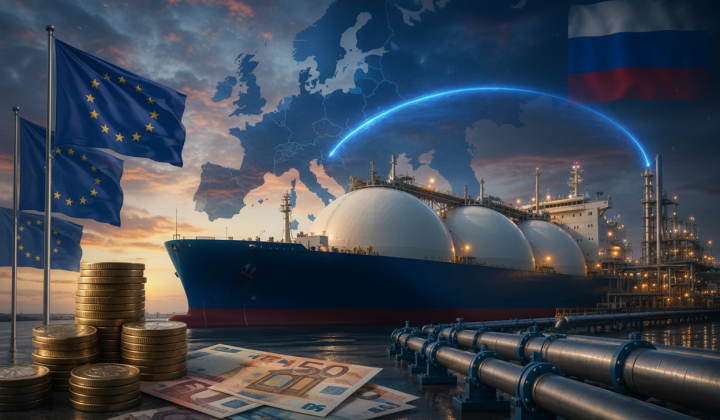
Yamal LNG Gas Purchases
According to Главком: Between January and April 2026, the European Union spent roughly €3.88 billion on record-breaking volumes of gas from the Russian Yamal LNG project. This surge occurred amid the closure of the Strait of Hormuz and new sanctions that took effect on April 25. The resulting geopolitical turmoil, including the outbreak of war in Iran, disrupted global liquefied natural gas (LNG) supplies and drove up demand for Russian energy.
Data from the environmental group Urgewald shows that EU countries received 91 cargoes of Yamal LNG totaling 6.69 million tons during the first four months of the year. Over this period, the EU accounted for 98% of all Yamal LNG exports. For three consecutive months, virtually every shipment from the project went exclusively to EU nations, while China received only two cargoes in the first quarter-and none in February or March.
LNG Market Dynamics
Belgium's Zeebrugge terminal emerged as the busiest import point, handling 25 deliveries of Russian gas. Meanwhile, LNG prices climbed sharply: the European gas benchmark TTF rose from around €35 per megawatt-hour at the start of the year to €52.87 in March, with an average of €45.21 per MWh in April.
The closure of the Strait of Hormuz since late February-a chokepoint for roughly one-fifth of global LNG shipments-has significantly impacted the worldwide LNG market. Restrictions on short-term contracts for Russian LNG, which came into force on April 25, further spurred record purchases in March. Additionally, Ukraine is preparing to boost natural gas imports from Poland, a move that could reshape regional supply dynamics.
Europe's LNG market is undergoing profound shifts amid a global energy crisis driven by geopolitical factors. The spike in Yamal LNG purchases highlights how EU nations are scrambling to secure alternatives in the face of Middle East instability and new sanctions on Russia. This underscores the critical need for diversifying energy sources to bolster the region's energy security.
The recent surge in Yamal LNG imports highlights the complexities of the EU's energy landscape, particularly in light of the upcoming ban on Russian LNG starting April 25. This shift could significantly alter supply chains and pricing dynamics across Europe, making it essential for stakeholders to understand the implications of these changes on the broader energy market.

Read also