Revolutionary Spectrometer Slashes Research Time from Hours to Minutes in Europe

New Spectrometer Unveiled
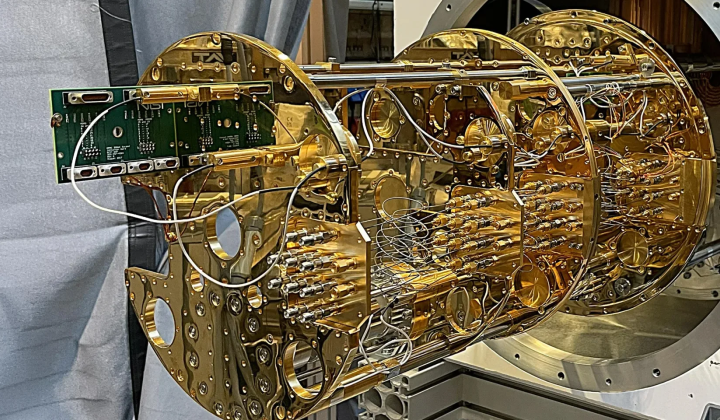
According to НВ — Техно: On June 24 at 5:00 PM, a cutting-edge spectrometer based on a Transition-Edge Sensor (TES) array was introduced. Developed by an international team including Germany's HZB and MPI-CEC institutes alongside the U.S. National Institute of Standards and Technology (NIST), this instrument is now installed at a European synchrotron facility-the first and only one of its kind in the region. It dramatically outperforms conventional models by analyzing radiation 100 to 1,000 times more efficiently, enabling the study of electronic properties in nanostructures, highly diluted samples, and materials just one atom thick.
Key Advantages of the New Spectrometer
A major breakthrough of this device is its drastic reduction in measurement time. Tasks that once took hours can now be completed in mere minutes. This leap is made possible because traditional XES and RIXS methods require detecting large numbers of photons, whereas this new system relies on 248 specialized micro-sensors for much faster data collection. These sensors are cooled to about 25 millikelvins (minus 273.125 degrees Celsius) using a helium isotope dilution refrigerator, similar to those found in quantum computers.
When a photon strikes a sensor, it causes an instantaneous microscopic heating event that disrupts superconductivity and alters electrical resistance, detected by a SQUID circuit. The spectrometer is also integrated with an ultra-high vacuum chamber, allowing sample temperature control from 10 Kelvin to room temperature. The system is mounted on a synchrotron beamline with full polarization control.
The TES technology powering this spectrometer was originally developed for astrophysics. Until now, only five similar spectrometers were operational worldwide, located in the United States and Japan. Europe's scientific community has already opened applications for research proposals, signaling strong interest in the new capabilities this innovative device unlocks.
Installing this TES array-based spectrometer in Europe marks a significant milestone in materials science and nanotechnology research. With its exceptional efficiency and speed, it opens new frontiers for studying complex materials and nanostructures, with potential impacts across fields like electronics and energy. As technology rapidly advances, this spectrometer could become a vital tool for scientists in Europe and beyond, aiming to reach new heights in their investigations.
The advancements in spectrometer technology are not isolated; similar breakthroughs are occurring in various fields of physics. For instance, Swedish researchers have achieved a tenfold reduction in optics development time, showcasing how innovative techniques can significantly enhance research efficiency across disciplines. Such developments underscore the importance of cutting-edge instruments in accelerating scientific discovery.

Read also