Mars First: NASA Rover Discovers Corundum, the Mineral Behind Rubies and Sapphires

A Mineral First on Mars
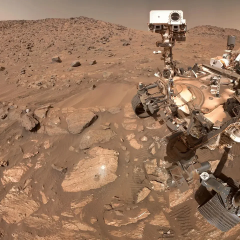
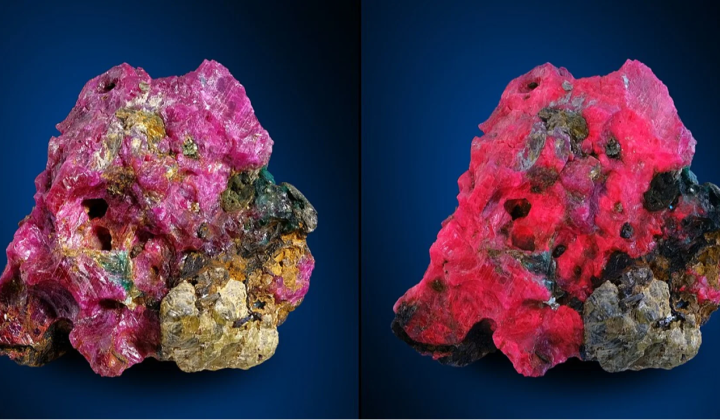
According to НВ — Техно: NASA's Perseverance rover has identified corundum-a crystalline form of aluminum oxide and the mineral underlying rubies and sapphires-in three rock fragments within Jezero Crater. This is the first time the mineral has been confirmed on the Martian surface. Using the laser-based SuperCam instrument, scientists detected characteristic luminescence peaks at wavelengths 692.7 nm and 694.1 nm. The findings, led by geochemist Ann Ollila of Los Alamos National Laboratory, have been published in Geophysical Research Letters. Corundum's origin is likely connected to a meteorite impact and subsequent hydrothermal activity, adding weight to arguments for returning Martian samples to Earth.
How the Discovery Was Made
The team used time-resolved luminescence spectroscopy (TRL) to examine the samples, named Hampden River, Coffee Cove, and Smiths Harbor. All three produced the same two luminescence peaks at 692.7 nm and 694.1 nm, which arise when chromium atoms substitute for aluminum in the crystal lattice. In the Smiths Harbor sample, the glow lasted roughly 3 milliseconds. The corundum occurs as microscopic grains embedded within larger rock pieces.
All three rocks consist predominantly of plagioclase feldspar. For corundum to form, conditions must have been rich in aluminum and low in silicon. Since the fragments are free-lying, rather than part of the bedrock, the team suspects they were altered by a massive meteorite impact-the one that carved out Jezero Crater billions of years ago. A subsequent hydrothermal environment, which would have leached silicon, could have further aided corundum crystallization.
Corundum has previously been documented in impact-altered rocks on both Earth and the Moon. To gain sharper insights into how it formed on Mars, the researchers say the next step is to find the original bedrock layer from which these fragments broke away. The study appears in the journal Geophysical Research Letters.
This discovery marks a significant step forward in understanding Mars' geological history. - Source: Geophysical Research Letters
Such findings will guide upcoming Mars missions, particularly those focused on collecting and returning samples for in-depth laboratory study.

Read also