Philosophers in Rivne Reflect on Ukraine’s Resilience Amid War, Emphasizing Unity and Dignity

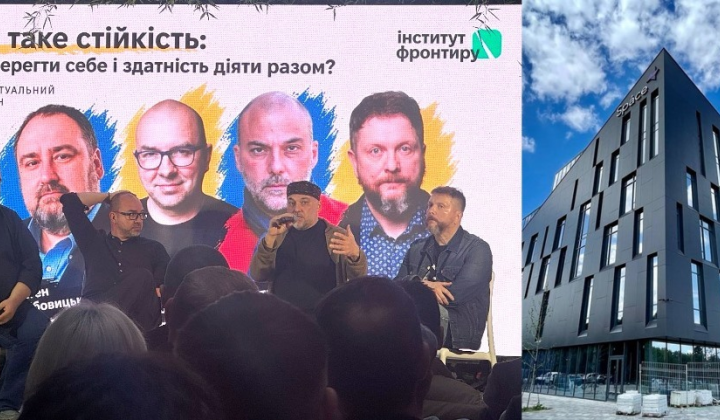
Philosophical Gathering in Rivne
According to Radiotrek — Світ: On September 19, 2026, Rivne hosted a philosophical forum centered on "What Constitutes Resilience: Preserving Ourselves and Our Capacity to Act Collectively." The event was guided by political scientist Yevhen Hlibovytsky, featuring prominent philosophers and faculty members from the Kyiv-Mohyla Academy, most of whom reside in Kyiv. The discussion explored various dimensions of resilience, including its definition, the importance of solidarity, challenges faced by Russian-speaking Ukrainians, religious diversity, and historical examples such as the life of Halshka Hulevychivna.
Defining Resilience and Navigating Challenges
Participants offered two key interpretations of resilience: endurance over the long term and self-governance. They underscored that defeat in the ongoing war with Russia would mean the end of Ukraine and the loss of life for a majority of its citizens. Despite this grim reality, Ukrainians are not intimidated by the future, which they view as their central anchor. As one Kyiv philosopher expressed:
"Ukrainians may fear many things. But the one thing we do not fear is the Future." - Kyiv Philosophers
A core takeaway was the emphasis on unity-not only as the ability to act in unison but also as the willingness to embrace diversity and accept people with differing viewpoints who are united in defending Ukraine.
The status of Russian-speaking Ukrainians sparked intense debate. Kyiv philosophers highlighted the Kremlin’s narrative that equates the presence of the Russian language with Russian allegiance. The conversation also touched on the complexities of religious unity in Ukraine, particularly among the Orthodox Church of Ukraine (OCU), the Ukrainian Orthodox Church (Moscow Patriarchate), and the Ukrainian Greek Catholic Church (UGCC). While acknowledging that Ukraine’s resilience has limits due to finite resources, philosophers stressed the need for innovative propaganda strategies to weaken an adversary portrayed as an unstoppable, almost mythical force.
Public opinion data from Russia was cited, revealing that 60% of Russians favor ending the war and initiating negotiations, while 30% have consistently opposed the conflict. Russia’s population is approximately 45 million, with over 10 million people of Ukrainian descent. Despite numerous obstacles, the philosophers concluded that the foundation of resilience lies in dignity and freedom.
Reflecting on historical context, the forum examined Halshka Hulevychivna’s legacy as a benefactor of the Kyiv-Mohyla Academy and a figure rooted in Orthodox faith rather than nationalism. Ukrainian brotherhoods formed to resist Catholic influence were also Orthodox. Participants agreed on the importance of breaking cycles of blame and mutual recrimination, noting that the early weeks of March 2022 marked the birth of a nation united beyond language or religious differences.
Ultimately, the Rivne event served as a vital platform to address Ukraine’s resilience in wartime, stressing the necessity of unity and acceptance of diversity within society. Attendees highlighted the importance of adapting to new realities, especially amidst external threats. Discussing topics such as the role of Russian-speaking Ukrainians and religious pluralism is crucial for shaping a shared vision of Ukraine’s future. These conversations contribute to strengthening internal cohesion and resilience, which are indispensable in today’s challenging environment.

Read also