A fortunate lab accident: two never-seen exotic particles enter the physics menagerie

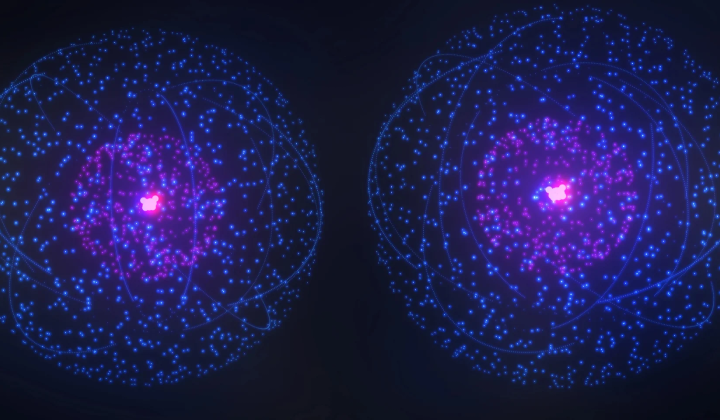
An exotic particle menagerie
According to НВ — Техно: A team of U.S.-based researchers working on the international GlueX collaboration at the CEBAF particle accelerator has stumbled upon two previously unseen states of matter. The new exotic particles, designated Y(2240) and X(1830), emerged during a search for a hypothetical object called Y(2175). Rather than finding that predicted particle, the scientists observed fresh structures that could offer a new window into the fundamental nature of matter. Such particles exist only fleetingly, surviving for tiny fractions of a second before decaying.
Inside the search: methods and findings
In the experiment, electrons were fired at a thin diamond foil, which converted them into an intense high-energy photon beam. When those photons collided with protons in liquid hydrogen, the detectors picked up two new mesons: Y(2240) and X(1830). The Y(2240) signal has reached five sigma - a statistical confidence of 99.9994 percent - giving the finding extremely strong support.
These particles are not simple quark-antiquark pairs; gluons appear to play a central role in their internal structure. Researchers believe the mesons contain excited gluon fields - the same force fields that bind atomic nuclei together. Theorists are now analysing the GlueX data to see whether the Standard Model can account for the unexpected structures.
- The Y(2240) particle
- The X(1830) particle
'We went looking for a known candidate and wound up finding two different structures instead. That is fundamentally new information for physics.' - Malte Albrecht
Commenting on the significance of the discovery, Justin Stevens said: 'It's fascinating to ask whether the structure we're seeing has a real gluon contribution - because we're dealing with more than just a plain quark-antiquark pair.' Frank Nerling added: 'We're in a new era reminiscent of what happened 70 years ago. We've now encountered a whole zoo of so-called exotic states.'
The discovery of Y(2240) and X(1830) could reshape how physicists understand elementary particles. It also underscores the value of experiments designed to find states of matter that fall outside conventional models. According to the team, these findings may spur further research and help solve long-standing puzzles in particle physics. They also open new avenues for exploring quark-gluon interactions - the fundamental processes behind the formation of matter. With that in mind, future studies could extend our view of the universe even further.
In light of these groundbreaking findings, it's essential to explore how recent advancements in particle acceleration have contributed to our understanding of exotic matter. For a deeper dive into the implications of high-energy experiments and their role in uncovering the mysteries of the universe, read more about the acceleration of the hottest known matter.

Read also