Two Paths for Hairy Black Holes Unveiled: Evolution Scenarios and the Emergence of Boson Stars

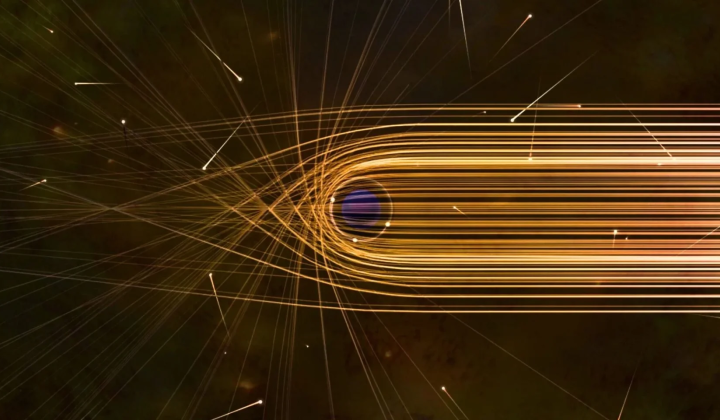
Black Hole Evolution Unraveled
According to НВ — Техно: Researchers at the University of Aveiro have simulated the instability of hairy black holes, revealing two possible evolutionary outcomes: either the black hole absorbs the surrounding scalar field, or it separates from it, leaving behind a boson star. These theoretical models require further investigation, especially to understand the influence of black hole rotation and the potential detection of gravitational waves produced during the separation process.
Study Details and Findings
The study was carried out by physicists José Ferreira, Carlos Herdeiro, Eugen Radu, and Miguel Zilhão, with findings published in Science Alert. Their work focused on hairy black holes-black holes that possess additional properties beyond mass and spin, referred to as "hair" in physics, such as a scalar field.
A scalar field consists of spinless particles that can be gravitationally bound to a black hole. Previous research was limited by assuming spherical symmetry, which masked the instability of these systems. Through advanced computer simulations, the team identified two distinct scenarios:
- The scalar field is fully absorbed by the black hole;
- The black hole detaches from the scalar field, resulting in the formation of a boson star-a gravitationally bound object lacking an event horizon.
The compactness of the scalar field plays a crucial role in determining the outcome: denser fields tend to be absorbed, while less compact ones are more likely to cause the black hole to split away.
It's important to note that the model presupposes the black hole carries an electric charge, a condition unlikely for astrophysical black holes. The research team plans to explore scenarios where black hole rotation substitutes for electric charge.
The separation event could generate unique gravitational wave signatures, distinct from those produced by black hole mergers. This discovery opens new avenues for detecting and understanding complex cosmic phenomena.
Published on September 30 at 15:05, this research marks a significant advancement in comprehending black hole dynamics and their interactions with scalar fields. Future experimental efforts may validate these theoretical models and enhance our ability to study the universe through gravitational wave astronomy.
Understanding the evolution of hairy black holes is crucial, especially in light of how roaming black holes influence the early universe. Their interactions and behaviors could provide insights into the formation of structures in the cosmos, highlighting the interconnected nature of black hole phenomena and cosmic evolution.

Read also