Gates Warns of the Most Perilous Moment for the U.S. Amid Nuclear Adversaries

The Israel-Iran Conflict
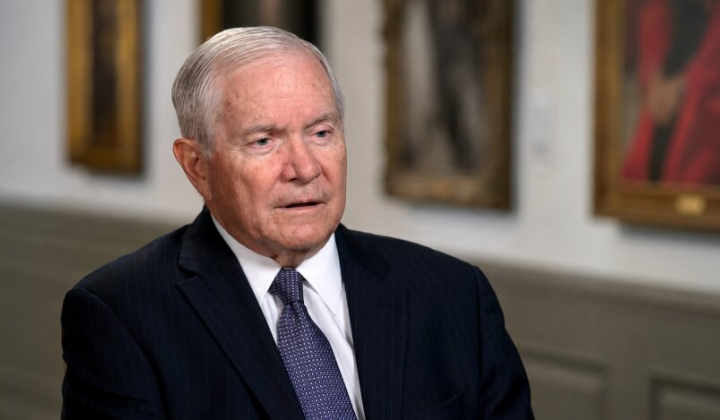
According to ХВИЛЯ: In an interview aired on May 17 during CBS News' Face the Nation, former U.S. Defense Secretary and CIA Director Robert Gates stated that the conflict between Israel and Iran is far from over. He emphasized that strikes on nuclear facilities would not resolve the issue, and the only way to halt Tehran's nuclear program is through negotiations and the removal of enriched uranium. Gates stressed that Israel cannot handle the situation with Iran on its own, as no matter how powerful they are, they lack the strength of the United States.
Gates also commented on the current political landscape, describing this moment as one of the most dangerous in modern U.S. history. He noted that the United States is simultaneously confronting two nuclear adversaries-one in Europe and one in Asia. Specifically, he cited China, which, along with Russia, will have nearly twice as many deployed nuclear warheads as the U.S. after China's strategic forces are modernized. Gates underscored that Donald Trump was consistent in his stance that Iran must not acquire a nuclear bomb.
Situations in Ukraine and Taiwan
During the interview, Gates also addressed the situation in Ukraine, mentioning that he had read reports indicating Ukraine plans to produce 7 million drones next year.
“We need that level of manufacturing in the United States,” Gates stated.
Additionally, he commented on the personnel purges at the Pentagon, noting that if staffing changes are necessary, the method of implementation matters, and it is crucial to explain to people why these changes are happening.
Gates also recalled his 2009 meeting with Israeli Prime Minister Benjamin Netanyahu, where he warned that Netanyahu was fundamentally mistaken in underestimating the resilience of the Iranians. Regarding the situation in Taiwan, Gates considers a full-scale Chinese invasion unlikely, despite Xi Jinping having dismissed all generals in the top military leadership in recent years, and two former Chinese defense ministers facing execution. U.S. Defense Secretary Pete Hegseth has also dismissed at least 16 senior military officers, signaling significant shifts in U.S. defense strategy.
Gates' remarks highlight the urgency of nuclear disarmament and geopolitical stability, which are especially critical in today's international political climate. Negotiations among the U.S., Israel, and Iran could be key to avoiding an escalation of conflict in the Middle East. Furthermore, the situation in Ukraine and changes in U.S. defense policy indicate that the country is actively responding to the challenges it faces amid global instability and threats from nuclear powers.
In light of Gates' remarks on the precarious geopolitical landscape, it's worth noting that recent developments indicate a shift in U.S. relations with Iran. As highlighted in a separate report, the U.S. administration has engaged in constructive discussions with Iran, signaling a potential move away from military confrontation. This evolving dynamic may influence the broader context of U.S. foreign policy amidst rising nuclear tensions globally.

Read also