CASE Study Reveals NGOs and Volunteers Contribute Up to 4.5% of Ukraine’s GDP

The Economic Impact of Ukraine’s Civil Society
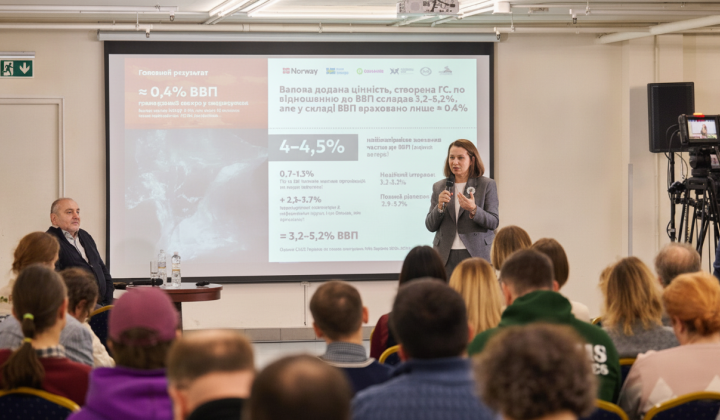
According to Рубрика — Суспільство: A recent study by CASE Ukraine and ISAR Ednannia highlights that non-governmental organizations, charitable foundations, and volunteers together contribute between 4% and 4.5% to Ukraine’s gross domestic product (GDP). This figure is ten times higher than official statistics, which report the nonprofit sector’s share at just 0.4%. The bulk of this contribution comes from unpaid volunteer work, accounting for 2.5% to 3.7% of GDP.
The overall estimated contribution of the civil society sector ranges from 3.2% to 5.2%, with the full spectrum of estimates spanning 2.9% to 5.7%. Public organizations and charities themselves are estimated to contribute between 0.7% and 1.5% of GDP. On average, Ukrainian volunteers dedicate around 4.5 hours weekly. According to the study, the average hourly wage in Ukraine is projected at 100 UAH in 2024, rising to 119 UAH in 2025.
Research Approach and the Need for Better Data
The findings are based on three sociological surveys conducted by Info Sapiens for the Zagoriy Foundation (2024), the NGO 'Expert Resource Gender in Detail' (2025), and CASE Ukraine (2026). To avoid skewing results, three exceptionally large organizations were excluded from the sample. The dataset covers between 28,700 organizations with regular financial reporting and up to nearly 58,900 potentially active groups.
These figures represent a satellite account and are not yet incorporated into Ukraine’s official GDP statistics. Experts recommend three key measures to improve data accuracy and better integrate volunteerism into national statistics:
- Incorporate volunteer activities into state surveys,
- Establish a regular satellite account for the nonprofit sector,
- Recognize the sector’s contribution within government policy frameworks.
As Vladimir Dubrovsky noted, "The civil society sector’s contribution to social welfare can be roughly compared to industries such as construction, mining, education, and healthcare. Yet, most of this input remains unrecorded in official statistics."
Natalia Klymova emphasized the importance of reliable data for the sector: "Since we often engage with government bodies and other authorities to advocate for data-driven decisions, it’s only fair that we ourselves have access to solid data about our own sector."
This research underscores the significant economic role of Ukraine’s civil society and stresses the urgent need to enhance statistical accounting for a more accurate depiction. The sector’s contribution includes NGOs, charitable foundations, individual volunteers, and informal groups. Future efforts will focus on surveying the top 10 largest civil society organizations and refining estimates of inactive groups.
As the impact of civil society on Ukraine's economy becomes increasingly evident, understanding the various avenues of support and contribution is vital. For instance, how individuals can contribute to pension funds online offers an additional perspective on civic engagement and financial involvement. This highlights the broader role that citizens can play in strengthening the nation's economy.

Read also