From 2027, Ukrainian Teens to Launch I AM SAFE Initiative Against Online Recruitment in Schools

The Challenge of Online Recruitment Targeting Ukrainian Teens
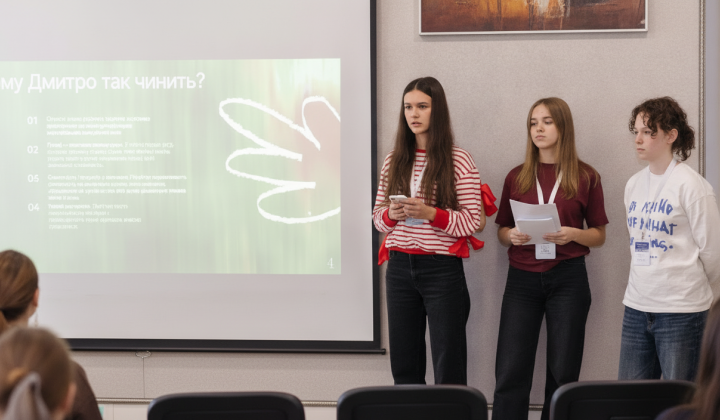
According to Рубрика — Суспільство: Russian intelligence agencies have increasingly targeted Ukrainian teenagers through social media, posing a significant threat to the safety of young people in the country. In response, a group of Ukrainian adolescents developed the I AM SAFE project, designed to combat online recruitment efforts. This initiative is set to be introduced in schools nationwide starting in 2027, following its success in a hackathon organized by the NGO Dignity Online in partnership with Save the Children, and supported by the Swedish government, the European Union, and the Nova Ukraine foundation.
According to a nationwide survey conducted in 2026, 3.6% of Ukrainian students reported receiving offers online to participate in risky activities. Among those approached, nearly 40% chose not to engage, while almost half of the teens who accepted believed their actions were useful and justified. The study also revealed that 55.9% of adolescents aged 14 to 17 shared their online dangers with friends, whereas only 37.8% confided in their parents.
Hackathon Victory and Project Rollout
The hackathon titled "My Voice-My Online Safety" provided a platform for young people from the Children's Council and their families to collaborate. The winning project, I AM SAFE, was created by three teenagers: Maria from Kyiv, Liza from Poltava, and Anzhelika from the Kyiv region. Dignity Online plans to transform I AM SAFE into an educational program for schools across Ukraine in 2027.
Anastasia Dyakova, a representative from Dignity Online, stated: "We will begin implementing the project in 2027. Experts will refine the program in cooperation with the Children's Council, and Dignity Online will provide expert and methodological support."
The program targets students in grades 5 through 11, as well as teachers and parents. Training for student leadership will focus on three key areas:
- Identifying recruitment tactics;
- Effectively communicating risks among peers;
- Guiding peers to appropriate help resources.
Importantly, the student leaders will not act as counselors or interrogators but will assist their peers in reaching out to adults or contacting the helpline at 1545. The program will utilize a mix of online and offline workshops, an informational website, interactive tasks, chatbot support, and video lessons.
Scaling the project will follow a cascade model, training student leaders who will then educate others. Special emphasis will be placed on communities hosting displaced families. Beyond schools, I AM SAFE is expected to benefit extracurricular clubs, youth centers, summer camps, libraries, and sports groups. This initiative will serve as a vital resource for educators, psychologists, social workers, and parent groups in fostering a culture of digital safety.
Anastasia Dyakova highlighted: "Among teens aged 14 to 17 who shared risky online experiences, 55.9% spoke to friends, while 37.8% confided in their parents. Young people are not just those needing protection-they are often the first to support one another. This aligns with Article 12 of the UN Convention on the Rights of the Child, which guarantees their right to be heard in decisions affecting them."
Ultimately, the I AM SAFE project represents a crucial advance in countering online recruitment and raising awareness among youth about internet dangers.
By fostering safer digital environments for young people, especially amid current challenges, the I AM SAFE program underscores a committed approach to tackling online recruitment. Its school-wide adoption in 2027 reflects the urgent need to empower youth as active participants in protecting themselves and their communities against cyber threats.

Read also