Toronto Engineers Develop Brilliant Nanoparticles for Ultra-Sensitive Chemical Detection

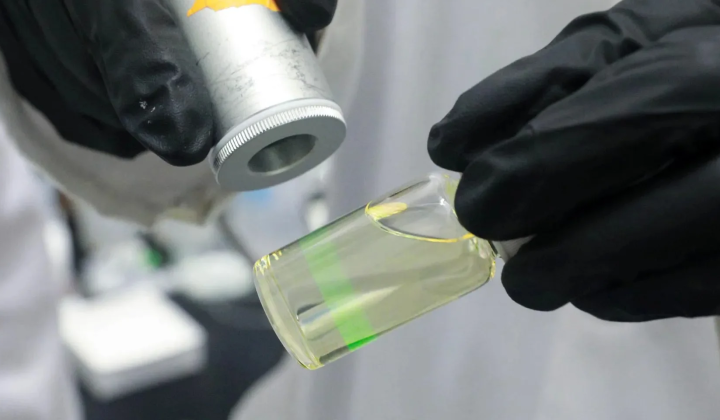
Breakthrough Nanoparticles Engineered at the University of Toronto
According to НВ — Техно: A team of engineers at the University of Toronto has pioneered a groundbreaking class of extraordinarily bright nanoparticles capable of detecting minute traces of chemicals with exceptional precision. These nanoparticles can differentiate structural isomers and emit light through an upconversion process, where lower-energy photons are converted into higher-energy emissions. Currently in the proof-of-concept stage, this technology holds promising applications in both medical diagnostics and environmental monitoring, such as identifying contaminants in pharmaceuticals and pollutants in groundwater.
Distinctive Advantages of the New Nanoparticles
These innovative nanoparticles demonstrate the ability to sense chemical substances at extremely low concentrations. Their light emission is roughly 150 times more intense than that of conventional nanoparticles, thanks to their unique capacity to convert low-energy photons into high-energy signals. A key advancement lies in substituting the nanoparticle matrix with compounds containing rare earth elements like lithium, lutetium, and fluorine, which significantly enhances performance.
The nanoparticles feature a sophisticated three-layered rhomboid structure-core-shell-shell-that effectively eliminates background autofluorescence in samples. According to Professor Kai Huang, this design "substantially simplifies signal detection." This feature paves the way for highly detailed analysis of complex samples and can greatly improve the accuracy of detecting hazardous impurities.
Although still at the experimental validation phase, plans are underway to scale up production. This development could revolutionize the methods used for chemical analysis and detection, offering substantial benefits across healthcare and environmental fields.
This innovation highlights the critical role of advancements in analytical chemistry, where detecting microscopic contaminant levels is vital for ensuring drug quality and environmental safety. Scaling up the manufacture of these nanoparticles may accelerate their integration into routine medical and ecological testing, ultimately enhancing safety and efficiency in these vital areas.
As advancements in nanotechnology continue to unfold, researchers are also exploring innovative methods in electronics. For instance, a recent development in aerosol jet printing has shown promise for creating intricate 3D electronic circuits. This technique could complement the capabilities of the newly engineered nanoparticles by enabling more efficient integration of chemical sensors into electronic devices.

Read also