Three US Navy Ships Come Under Iranian Attack in the Strait of Hormuz

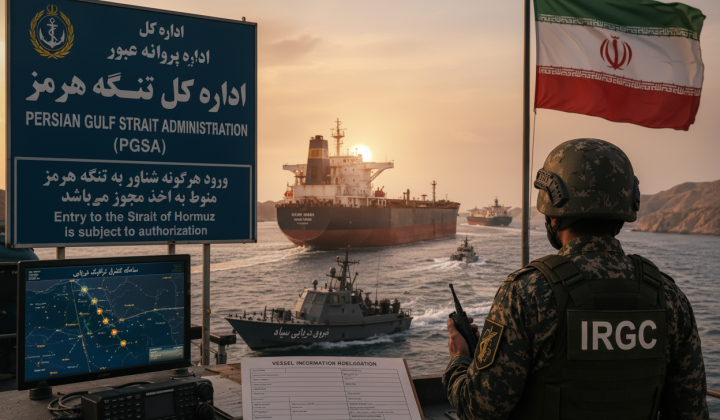
Establishment of the Persian Gulf Strait Administration
According to Главком: On May 5, 2026, Iran set up the Persian Gulf Strait Administration (PGSA), introducing a new vessel authorization system for the Strait of Hormuz. Ship owners must now submit a Vessel Information Declaration before entering the strait. The required declaration includes:
- complete history of vessel names
- identification numbers
- crew nationalities
- operators
- ultimate beneficial owners
- cargo and route details
If the information provided is incomplete or false, Iranian forces are authorized to take retaliatory measures, which may include detention or drone strikes.
Rising Tensions in the Region
Transit fees could reach as high as $2 million for large oil tankers. The U.S. Office of Foreign Assets Control (OFAC) has warned that any payments made to the Iranian administration for passage through the strait will be treated as financing terrorism. Approximately 20% of the world's oil traffic passes through the Strait of Hormuz, underscoring the significance of these new regulations.
The situation escalated dramatically when Iran attacked the American warships USS Truxtun, USS Rafael Peralta, and USS Mason using missiles, drones, and small attack boats. Iranian forces stated that the operation was a response to a ceasefire violation and U.S. aggression against an Iranian oil tanker near the port of Jask.
Iranian authorities stated: 'Any incomplete or false information gives Iranian forces the right to take retaliatory measures.'
Additionally, Iranian lawmakers emphasized that 'war has a price,' highlighting the severity of the conflict's escalation. In response, U.S. officials warned that 'any payments to the Iranian administration for passage through the strait will be considered financing terrorism.' These events underscore the growing tension in the Strait of Hormuz, which could have serious consequences for international shipping and energy security.
By creating this new administration and enforcing strict navigation rules in the Strait of Hormuz, Iran has significantly complicated the situation in a region that handles a major share of global oil traffic. With the U.S. threatening to classify transit payments to Iran as terrorist financing, further escalation appears likely. As the maritime conflict between Iran and the United States continues to intensify, developments in this area could have far-reaching implications for global energy security and international relations.
The recent escalation in the Strait of Hormuz highlights the growing tensions in the region, particularly following Iran's decision to reclose the strait due to perceived U.S. provocations. This development raises critical questions about maritime security and economic implications for global oil trade. For a deeper understanding of the factors driving this conflict, see how U.S. actions have influenced Iran's latest moves in the region in our detailed report on the closure of the Strait of Hormuz.

Read also