Iran's Deep Divide After Airstrikes: No Revolution in Sight

Deep Social and Political Rifts Emerge in Iran
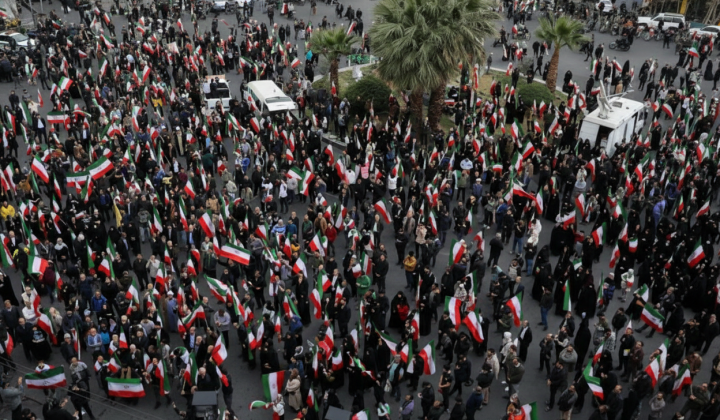
According to ХВИЛЯ: Iranian society is profoundly divided in the wake of recent airstrikes and the elimination of senior leadership. Public reaction has been mixed: while some citizens have held mass demonstrations of mourning, others have celebrated the strikes against the regime's infrastructure. Analysts, including Ilia Kusa and Yuriy Romanenko, caution against inflated expectations of a swift revolution. To date, there is no sign of a mass seizure of power by the opposition, and remnants of the Iranian government are taking steps to prevent large-scale protests. This internal crisis unfolds against a backdrop of long-standing tensions between the clerical establishment and a significant portion of the populace.
Anti-Government Sentiment and the Regime's Response
Anti-government sentiment is being recorded in cities such as Isfahan, Tehran, and Tabriz. Ilia Kusa notes that
"very few can be happy when their country is being bombed, but in reality, there were quite a few videos where people were celebrating-not because of the bombing, but in Isfahan, Tehran, Tabriz, and many other places, people came out shouting 'Death to Khamenei.'"
This indicates that protest sentiments are growing.
However, as Kusa emphasizes,
"nevertheless, the first reaction of any normal person is to save themselves and their family, not to run out and engage in political activism."
He also points out that 'people are not immediately going to say, 'let's go out into the streets and seize power.'' It is noted that a struggle for control over centers of power is ongoing within the country, complicating the potential for mass protests.
To prevent possible unrest, police and the pro-government Basij militia have been deployed to patrol the streets. Kusa asserts that 'I am sure they did this to prevent possible gatherings of people.' Thus, the Iranian authorities are attempting to control the situation, although public sentiment remains tense and complex.
The situation in Iran continues to be highly unstable, pointing to deep social and political fractures within society. The population's reaction to the airstrikes and the removal of leadership demonstrates that, despite the absence of mass protests, anti-government feelings remain potent. The continuation of political repression and state control could lead to an escalation of conflict in the future if public discontent is not addressed.

Read also