Iran's Endurance Strategy: Why Tehran Accepts Suffering in a Conflict with the U.S.

The Current State of Conflict Between the U.S., Israel, and Iran
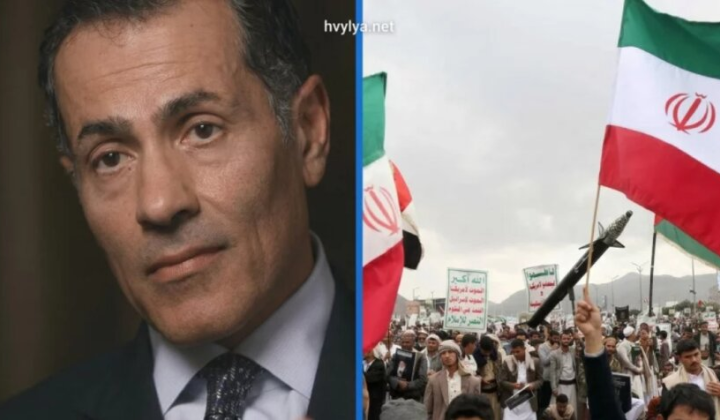
According to ХВИЛЯ: Political analyst Vali Nasr has provided insights into the ongoing tensions between the United States, Israel, and Iran. Nasr outlines Iran's strategic objectives, which focus on wearing down its adversaries and rallying domestic support around national symbols. Recent events indicate that Iran has faced aerial attacks from U.S. and Israeli forces, resulting in over a thousand casualties. This analysis comes amid a long-standing geopolitical rivalry that has shaped the Middle East for decades.
Prospects and Challenges for Iran
Vali Nasr, a professor at Johns Hopkins University's School of Advanced International Studies and a former advisor to the U.S. State Department under the Obama administration, notes that Iran's new Supreme Leader, Mojtaba Khamenei, is the son of the late Ayatollah Khamenei. According to Nasr, Khamenei attained his position not merely through lineage but also due to personal hardships, which grant him a form of charisma within Iran's religious-political context.
Widespread protests erupted in Iran this summer, signaling growing public discontent with the regime. Vali Nasr argues this has created new political divisions within the country.
"A completely new political divide has opened in Iran. Are you for war or against war?" he emphasizes.
He also points to the lessons from the Iran-Iraq war, a devastating conflict that claimed over half a million Iranian lives.
Nasr highlights the 2015 nuclear deal, noting that the late Supreme Leader Ali Khamenei issued a fatwa prohibiting nuclear weapons. However, he suggests the new leader and clerics in Qom could potentially revisit this stance.
"Shiites do not follow the fatwas of deceased ayatollahs. That fatwa is no longer valid," he comments.
Nasr further describes Iran's attempts to adapt to contemporary challenges. "It is a do-it-yourself country-a consequence of its isolation," he observes, adding that Iranians believe enduring strikes is necessary to confront the United States and Israel. He stresses that "for them, this is far more effective than acts of terrorism, which would only play into America's hands."
The situation in Iran reflects a complex balance between internal pressures and external threats. The summer protests revealed deep societal grievances, while aggressive posturing from the U.S. and Israel underscores the external dangers the nation faces. Understanding how nationalist sentiments might influence the conflict's trajectory and Iran's internal politics is crucial.
Vali Nasr remarks that Iranians' connection to their nation runs deep. "The relationship Iranians have with Iran is cultural, patriotic, national. It is higher and broader than any single government," the analyst underscores, pointing out that it is the country itself, not just the Islamic Republic, that endures the suffering.
The internal dynamics within Iran are also shifting, as evidenced by the emergence of factions willing to engage in negotiations with Western powers. This development highlights a potential rift in the leadership's approach to international relations, contrasting with the prevailing hardline stance. Understanding these divisions can provide deeper insights into Iran's strategic calculations in the ongoing conflict with the U.S. and its allies. For more on this complex landscape, read about the internal divisions within Iran's leadership.

Read also