Israeli Researchers Identify Four Distinct Spatial Patterns in Near-Death Experiences Highlighted by Colors and Shapes

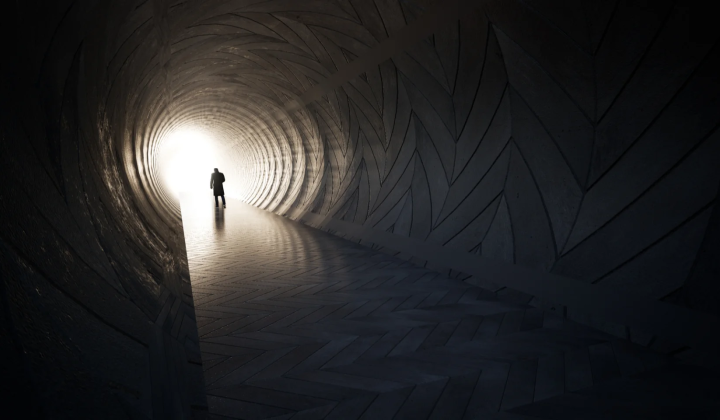
Exploring the Visual Realms of Near-Death Experiences
According to НВ — Техно: A team from the University of Haifa in Israel conducted a study to analyze the shapes and colors people perceive during near-death experiences (NDEs). Fifty participants were asked to recreate their visual impressions using drawings and geometric diagrams during online sessions. This approach led to the identification of four primary spatial types that commonly represent these extraordinary experiences.
Classification and Features of Spatial Types
The study revealed four main categories of perceived spaces:
- cone-shaped tunnels
- wide, curved spaces resembling arches
- flatter areas with gentle curves
- enclosed shapes similar to the interior surface of spheres or ovals
Of particular note, 28 out of 31 tunnel-like spaces were described as achromatic-meaning they appeared black, white, gray, or colorless. Conversely, 27 of 31 broad curved spaces were reported as colorful. The remaining categories included both colorful and colorless depictions.
The researchers also linked tunnel vision to reduced oxygen supply to the retina or brain, which narrows the field of view. In low-light conditions, eyes become less sensitive to color due to the activity of cells specialized for night vision. Some expansive spaces were compared to the Ganzfeld effect, a continuous perception of a uniform visual field that can trigger hallucinations.
Despite these insights, the study has limitations worth noting, including:
- a relatively small sample size
- reliance on self-reported experiences
- participants recalling memories from many years prior
- the potential influence of geometric templates on participants' drawings
- absence of a control group for comparison
Published on November 2 at 16:06, this research offers valuable clues toward understanding the visual phenomena associated with near-death states. Such findings could pave the way for advancements in therapeutic approaches based on patients' subjective experiences.
Near-death experiences have long fascinated both psychotherapists and neuroscientists. By shedding light on the visual forms and hues people associate with these moments, the study opens new avenues for exploring how the brain processes critical situations. Continued investigation into these mechanisms is essential for deepening our grasp of human consciousness at life's edge.
Understanding the nuances of visual perception during altered states can shed light on various cognitive processes. For instance, recent findings on how brain neurons toggle between awareness and suppressed perceptions reveal fascinating insights into how our minds interpret reality under different conditions. This connection may enhance our comprehension of the complex experiences reported during near-death scenarios.

Read also