California’s Quickfish Unmanned Vessel Operates as a Satellite Relay, Launching Drones for Up to Four Weeks at Sea

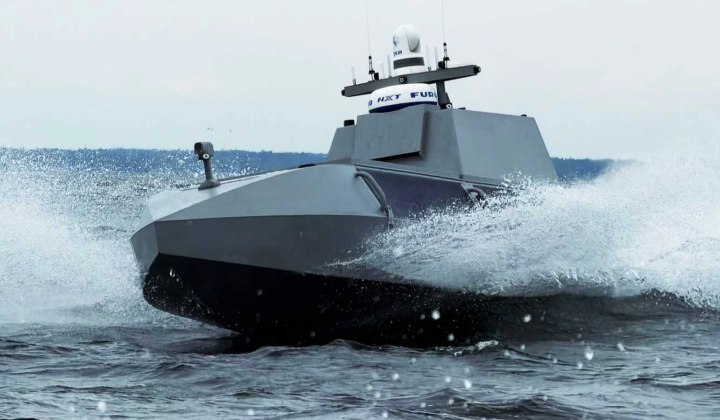
Quickfish: The Autonomous Seafaring Drone Launcher
According to НВ — Техно: Seasats, a California-based company, has engineered Quickfish, an unmanned marine vessel capable of deploying various drones from a sealed compartment onboard. These drones are remotely controlled via satellite communication, enabling operators to manage missions from anywhere across the globe. In November, Seasats demonstrated this capability with two successful deployments of the Archer FPV quadcopters and the Anduril Altius-600M winged drone, showcasing the system’s reliability.
Specifications and Operational Capabilities of Quickfish
Measuring 5.8 meters long and weighing approximately 1.8 tons, Quickfish can reach speeds up to 74 km/h and travel over 1,000 kilometers without support. It is designed to remain at sea autonomously for as long as four weeks. The vessel includes a modular internal bay that can carry payloads up to 227 kilograms, allowing it to launch a diverse range of drones.
During testing, the cost-effective Archer FPV quadcopters-priced between $2,000 and $5,000-were launched alongside the Anduril Altius-600M, a winged drone capable of loitering for up to 90 minutes at distances nearing 160 kilometers. The Altius-600M’s warhead weighs roughly 4 kilograms. Typically, FPV drone pilots must stay close to their targets due to radio signal limitations, but Quickfish overcomes this by acting as a floating satellite relay.
Serving as a maritime communication hub, Quickfish bridges drone operations with satellite links, allowing remote pilots to control their aircraft from vast distances.
Seasats CEO Mike Flanigan explained, "This represents distributed maritime aviation, where the concept of an aircraft carrier is scaled down to small unmanned vessels."
The advancement of unmanned maritime platforms like Quickfish holds significant promise for both military and civilian applications in coastal regions. Remote drone control over extended ranges opens new avenues for reconnaissance, surveillance, and mission execution that traditionally required personnel onboard. This technology not only reduces the risk to human life but also enhances operational efficiency in challenging environments. Given the accelerating pace of unmanned systems innovation, companies such as Seasats are well positioned to become leaders in this emerging market.
As the development of autonomous vessels continues to gain momentum, the Royal Navy's introduction of the Arctic Hunter USV highlights the growing importance of unmanned systems in enhancing maritime security, particularly in challenging environments like the Arctic and North Atlantic. This trend underscores the strategic shift towards leveraging unmanned technology for critical operations at sea.

Read also