Just 100 Million Years After the Big Bang, Rocky Planets Could Already Have Been Taking Shape

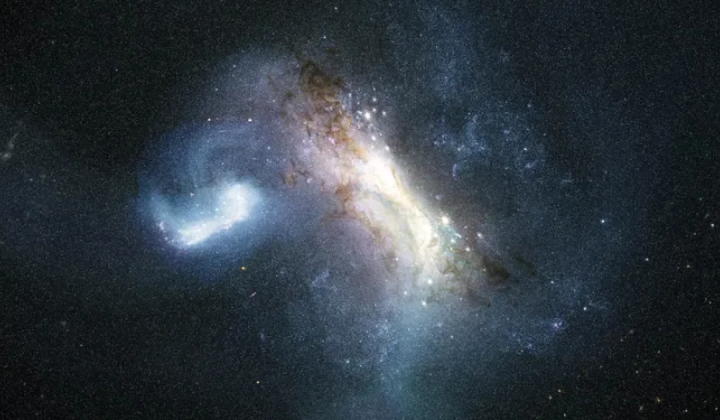
New Look at Early Planet Formation
According to НВ — Техно: At 14:01 on August 31, a new University of Portsmouth study offered a striking possibility: rocky planets might have started to take shape merely 100 million years after the Big Bang. Using computer models, the team found that exploding supermassive stars from the universe's first generations-especially pair-instability supernovae-could have left behind enough heavy elements and water to form planets around younger stars.
How Planet Formation Could Have Begun
The explosions of these early supermassive stars scattered heavy elements like carbon, oxygen, and iron across space. Pair-instability supernovae were particularly important because one such event could unleash more than 100 solar masses of heavy elements. The resulting gas cloud, enriched with these materials, could then contract and spin into a disk around a newly formed star.
In their simulations, the scientists created a disk around a star weighing approximately 70% of the Sun's mass. That disk held enough solid matter to produce several Earth-mass protoplanetary building blocks at a distance comparable to the Earth-Sun separation. It also contained water-though only a few times less than the amount present in the material from which the Solar System formed.
Researcher Daniel Whalen observed that the building blocks of Earth-like planets could have appeared around small, long-lived stars within the remnants of the first cosmic explosions, just 100 million years after the Big Bang.
If real, this would place the emergence of rocky worlds billions of years earlier than previously imagined. Still, the authors caution that the findings show a possible formation route, not proof that such planets actually existed.
The team further suggests that early planetary systems might have had conditions supportive of the origins of life. The conclusions come from computer simulations of the early universe, offering astronomers new ways to investigate how planets formed in deep space.
More broadly, this research reshapes our understanding of planet formation in the young cosmos. If rocky planets could truly arise so soon, the implications for astronomy and astrophysics are substantial, particularly in the search for life beyond our Solar System. As scientists continue to study these scenarios, the work could lead to major new discoveries about the evolution of galaxies and planetary systems.

Read also