Dwarf Mongooses Assess Enemy Strength Before Engaging in Conflict

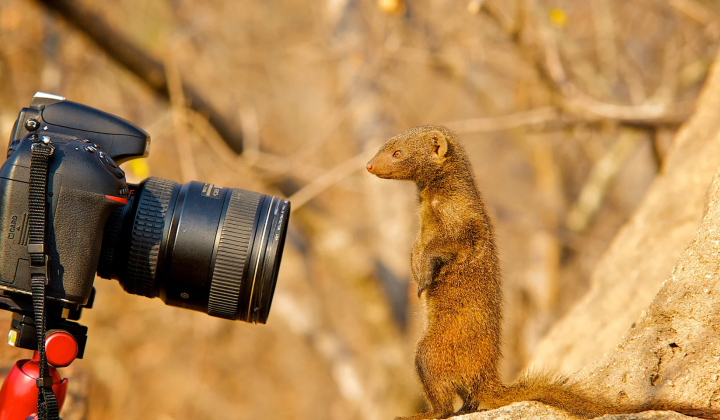
Field Study on Dwarf Mongooses in Southern Africa
According to НВ — Техно: In Southern Africa, a decade-long study combining direct observation with GPS tracking has revealed that dwarf mongooses adjust their behavior in areas where confrontations with rival groups are likely, taking into account the relative size of their own group versus opponents. These small carnivores, the smallest in Africa, live in groups ranging from 5 to 30 individuals and have developed strategies to avoid dangerous clashes.
Dr. Josh Arbon explained: 'Mongooses don't just keep tabs on where their enemies might be-they also factor in the comparative size of different groups. Based on that, they can tweak their behavior.' Such behavioral shifts help reduce the risks tied to intergroup fights and boost the chances of success in future encounters, according to Professor Andy Redford: 'We already know that battles between groups can be extremely hazardous for those involved. Now we’ve demonstrated that ongoing behavioral changes occur to soften these dangers.'
Thriving Amid Stronger Rivals
The research also highlights how dwarf mongooses manage to survive and even flourish despite facing more powerful adversaries. As Josh Arbon noted: 'This work offers insight into how smaller groups can endure and even prosper among stronger foes by moving strategically through their environment and signaling potential threats.' Dr. Julie Kern added that dwarf mongooses make an ideal model species for such studies because intergroup conflicts heavily shape their lives, and because they can be closely observed in the wild.
It is worth noting that in 1979, Japanese authorities attempted to use mongooses to control venomous snakes on Amamioshima Island, but the effort failed. The island is home to the endemic Amami rabbit (Pentalagus furnessi), and the mongoose introduction did not yield the desired results.
By habituating wild dwarf mongooses to human observers, researchers were able to collect detailed data under natural conditions, leading to a better understanding of the animals' behavior and social structure.
This study carries significant implications for understanding animal social behavior in the context of evolutionary adaptations. Examining the survival strategies of dwarf mongooses may prove useful for studying other species that also face intergroup conflicts. Moreover, the research underscores the importance of long-term observations in natural settings to obtain accurate behavioral data, which can have practical applications in species conservation and ecosystem management.

Read also