Cambridge Researchers Challenge the Comet Hypothesis for Early Earth's Organic Matter Delivery

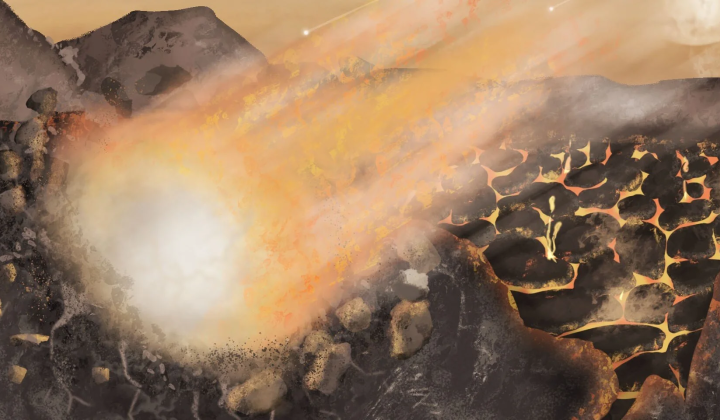
Reevaluating the Role of Comets in Earth’s Early Life Formation
According to НВ — Техно: A team of scientists from the University of Cambridge has cast doubt on a widely accepted theory that comets delivered organic compounds to early Earth, potentially kickstarting life. Their study reveals that organic molecules such as hydrogen cyanide (HCN) nearly completely vaporize upon entering Earth’s atmosphere. These findings were published in the journal Scientific Reports.
Unexpected Findings from Advanced Simulations
Lead researcher Dr. Richard Anslow explains that computer models indicate comets entered Earth's atmosphere at very high speeds and steep angles, making it unlikely for them to deposit significant amounts of organic material during Earth's formative years. Additionally, comet impacts were rare and sporadic during the planet's first 500 million years, resulting in minimal and uneven delivery of extraterrestrial substances.
The study also suggests that while the chances of comets delivering organic compounds to Mars are somewhat higher, they remain improbable. Instead, researchers propose alternative origins for the essential organic building blocks of life, including:
- Frequent asteroid impacts
- Earth’s own internal geochemical processes
This new perspective reshapes our understanding of comets’ involvement in the emergence of life on Earth and opens fresh avenues for future research. Given the significance of organic molecules in the origin of life, these findings prompt a reconsideration of traditional assumptions in astrobiology.
The implications extend beyond Earth, potentially influencing how scientists approach the search for life on other planets, especially Mars, where environmental history differs substantially. This research marks a pivotal step toward unraveling the complex origins of life in our solar system.
As researchers continue to explore the origins of organic compounds, the recent discoveries made by the James Webb Telescope regarding interstellar comets and their atmospheres could provide additional insights. Understanding these cosmic bodies may further inform our grasp of the building blocks of life across different celestial environments.

Read also