Four Radiation Belts Form Around Earth Following Intense May 2024 Geomagnetic Storm

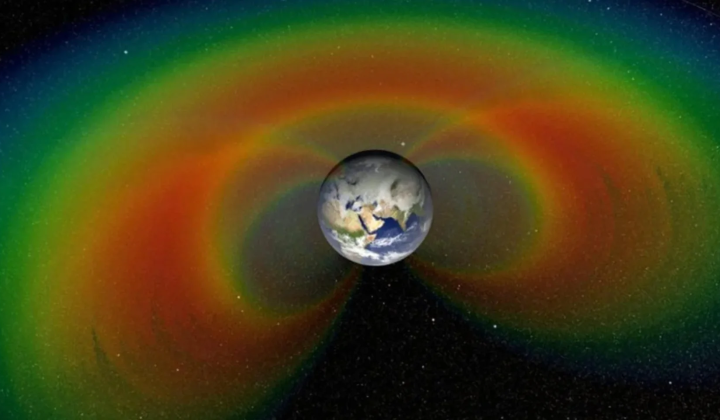
Geomagnetic Storm Sparks Formation of Extra Radiation Belts
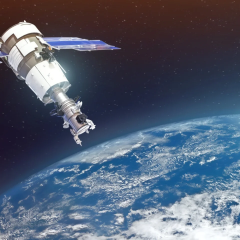
According to НВ — Техно: In May 2024, Earth’s magnetic environment was dramatically altered by a powerful geomagnetic storm, resulting in the emergence of four radiation belts instead of the usual two. This discovery was made possible through observations by the European Space Agency’s PROBA-V satellite, which carries the Energetic Particle Telescope and orbits at roughly 820 kilometers altitude. The storm, known as the Mother’s Day event on May 11, 2024, was the strongest geomagnetic disturbance recorded in two decades.
Understanding the Radiation Belt Structure
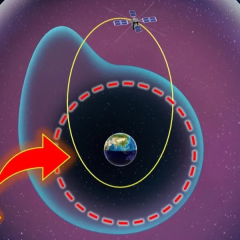
The Van Allen radiation belts, first detected in 1958 by the United States’ Explorer 1 satellite, traditionally consist of two main zones:
- An inner belt dominated by high-energy protons;
- An outer belt primarily composed of electrons.
Following the May 2024 storm, scientists initially observed three distinct electron belts, which expanded to four by June. By August 2024, however, the radiation belts had returned to their familiar two-belt configuration.
Experts emphasize that the development of additional belts was due to the redistribution of electrons driven by heightened solar activity rather than an increase in their overall number. Solar coronal mass ejections significantly influence the shaping of Earth’s radiation environment. The presence of high-energy protons and electrons poses risks to satellites and astronaut health, highlighting the critical need for continuous monitoring of such space weather events.
Researchers are committed to advancing their understanding of how solar activity interacts with Earth’s magnetic field to improve forecasting capabilities. As Vivien Pierrard noted,
“The frequent appearance of three or even four belts indicates new mechanisms governing the trapping and loss of charged particles.”
Similar complex belt structures were documented following intense geomagnetic storms between 2024 and 2026, including one in October 2024, underscoring the dynamic nature of space weather processes.
These findings underscore the importance of studying the interplay between solar phenomena and Earth’s magnetosphere, as fluctuations in radiation belts can have significant impacts on orbital technology and crewed space missions. Gaining insight into these newly observed mechanisms will enhance prediction models and improve safety for future space exploration endeavors.
The recent geomagnetic storm not only led to the formation of additional radiation belts but also raised significant concerns regarding the potential threats posed to our planet's protective shield. For a deeper understanding of the risks associated with these solar events, including how the storm breached Earth's radiation barrier, see our detailed analysis on the implications of May 2024's G5 storm.

Read also