China’s Image of Peace Under Fire: Massive General Purges Expose Xi Jinping’s Vulnerabilities

Examining China’s Internal Struggles
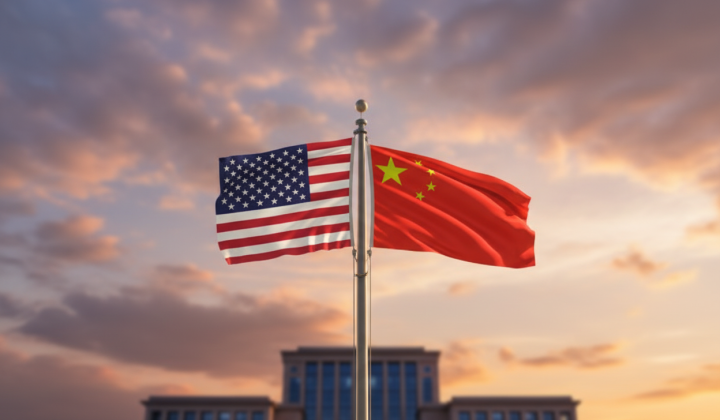
According to ХВИЛЯ: Political analyst Kamil Galeev stated during a broadcast with political scientist Yuri Romanenko that China’s restraint on the global stage-and its avoidance of aggressive expansion-stems not from a peaceful nature but from deep-seated domestic troubles. According to Galeev, Beijing is steering clear of direct confrontation with Washington, betting instead that the United States will 'destroy itself.'
“I think the logic there is: don’t make any sudden moves, just wait for the Americans to implode,” he remarked.
The expert emphasized that sweeping anti-corruption purges within the military leadership reveal the weak standing of Chinese leader Xi Jinping. He noted that “the enormous, large-scale purges within the army, among the generals, in very high numbers” provide the only plausible explanation for instability in the country’s governance. Galeev pointed out that China’s administrative system lacks safe mechanisms for power transition, making it more oligarchic and inherently riskier.
Galeev further observed that China’s passive foreign policy masks a fierce internal struggle for regime survival. He highlighted failures among Beijing’s allies, calling them a “cold shower” for the leadership. Drawing a comparison between China’s system and Russia’s, he said, “all these special operations don’t work, and those small victorious wars turn out to be neither small nor very victorious.” He cited political leaders like Putin and Trump as examples of how abrupt political moves can lead to destabilization.
How Domestic Issues Shape Foreign Policy
In this way, China’s current situation shows that internal problems significantly influence its foreign policy, compelling the country to steer clear of aggressive international actions.
Galeev’s comments underscore the critical role of domestic political processes in shaping China’s foreign policy. Amid instability and power struggles, Beijing is trying to avoid conflicts while hoping its rivals will self-destruct. This suggests that despite its economic strength, China remains vulnerable to internal challenges that could seriously impact its global standing.
As China grapples with its internal challenges, the implications of these struggles extend beyond its borders. Understanding the dynamics at play is crucial, especially when considering how domestic issues can reshape a nation's foreign policy. For a deeper insight into how similar internal factors are influencing the United States and presenting a different kind of threat, see our analysis on America's internal vulnerabilities.

Read also