Persian Gulf Crisis: Assessing the Economic Impact on China Versus the EU

Analyzing the Fallout from Disrupted Supply Routes
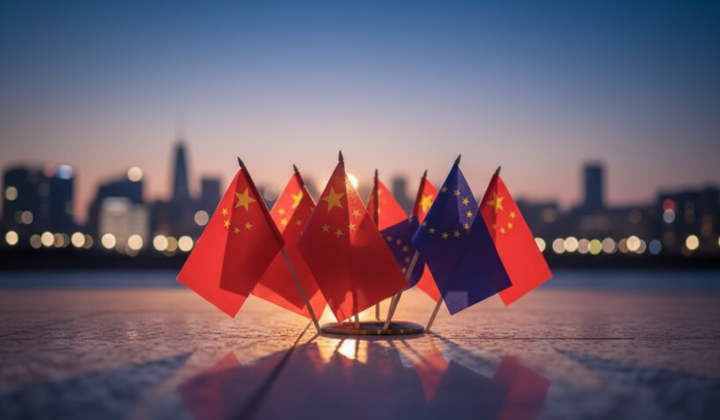
According to ХВИЛЯ: A disruption of key logistics routes in the Persian Gulf would expose the starkly different vulnerabilities and strategic preparations of the Chinese and European Union economies. China benefits from substantial strategic petroleum reserves, which have reached a volume of seven hundred million barrels. The country is further insulated by its domestic oil production and stable supply lines from Russia. However, the Chinese economy is currently grappling with deflationary pressures stemming from industrial overcapacity.
The European Union's Exposure
In contrast to China, the European Union lacks a centralized, strategic oil storage system comparable to those maintained by China or the United States. This leaves the bloc in a precarious position, a vulnerability compounded by potential disruptions to liquefied natural gas supplies from Qatar. The Persian Gulf is a critical chokepoint for global energy shipments, making any instability there a direct threat to import-dependent regions.
“Europe has no centralized oil storage systems like China or the US; it essentially operates on a just-in-time basis.” - Oleksiy Kushch
This structural deficiency means the EU is heavily reliant on continuous imports and has limited capacity to manage its energy inventories proactively.
Furthermore, a crisis in the EU could trigger a damaging economic chain reaction. Rising energy costs would inflate the production costs of goods and services, which then translates into consumer price inflation. Kushch explains that this “energy inflation, which is then imported into the cost structure of goods and services and becomes consumer inflation,” could force the European Central Bank to raise interest rates, heightening the risk of a recession.
Thus, while China possesses buffers through domestic output and Russian supplies, Europe risks severe economic turmoil from an energy shock. Oleksiy Kushch emphasizes that “the key mistake analysts make is applying so-called linear methods or linear logic.” Complex structural and geopolitical processes cannot be accurately analyzed using simplistic models.
The current situation in the Persian Gulf underscores the paramount importance of energy security for major global economies like China and the EU. Their divergent approaches to resource management could have profound consequences for their economic trajectories. While China has certain reserves and self-sufficiency levers, the EU faces challenges that may exacerbate existing economic difficulties. This scenario demands careful monitoring and strategic adaptation from policymakers to ensure stability.

Read also