Star-Guided Navigation for Hypersonic Missiles Emerges From Chinese Lab

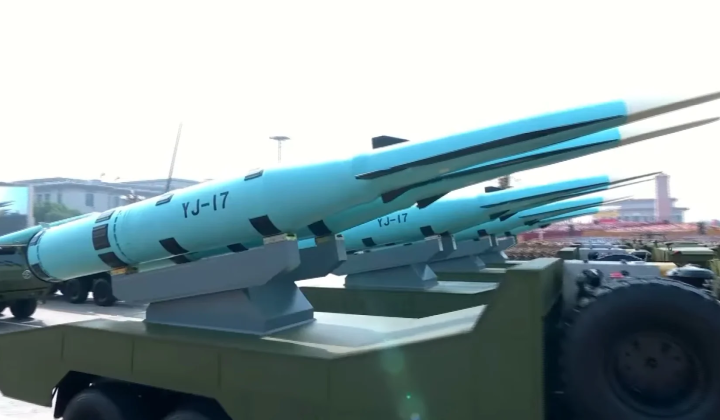
Jamming Won't Stop It: China's New Missile Navigation Reads the Sky
According to НВ — Техно: Published: August 13, 10:30
A team at the Guangdong Aerospace Research Academy has built a hypersonic navigation system that locks onto stars as fixed reference points. It is designed for situations where satellite signals drop out or become unreliable. With GPS and China's BeiDou constellation both vulnerable to electronic jamming, this new approach aims to keep missiles on course even in contested environments.
How the New Navigation System Works
Celestial navigation determines position and orientation by measuring angles to stars. Hypersonic flight-meaning speeds above Mach 5-poses a tough challenge because a scorching gas layer around the vehicle distorts incoming starlight. The researchers solved this by using radiation modeling and a purpose-built star sensor that achieves spectral resolution down to 0.12 nanometers.
Tests show the system recognizes star patterns with better than 99 percent accuracy when no radiation interference is present. Under severe aerodynamic disturbance, recognition still exceeds 80 percent. The sensor's positional accuracy is finer than 5 arcseconds, pointing to strong overall reliability.
The report also discusses the DF-17 missile, a hybrid of a ballistic rocket and a hypersonic glide vehicle. After launch, the DF-17 separates from its booster and travels through the atmosphere at speeds above Mach 5, adjusting its trajectory as it goes. That maneuverability makes detection, tracking, and interception far harder for current missile-defense systems, which is why it is viewed as especially threatening.
Separately, the researchers adapted this radiation technology for use in engine testing and industrial combustion monitoring. The broader implication is that this navigation system could greatly strengthen military capabilities in environments where conventional satellite-based positioning is unavailable or deliberately disrupted.
China's progress here underscores the ongoing global race in hypersonic weapons and defense innovation. As geopolitical tensions rise, having a missile that can navigate autonomously and precisely without relying on space-based systems may become a decisive military advantage. It also pushes other countries to rethink their air-defense strategies in response to these new threats.
As advancements in navigation technology continue, the implications extend beyond military applications. For instance, recent developments in radio wave computations at a Chinese university showcase how complex calculations can be performed directly through innovative methods. This breakthrough could revolutionize various fields, much like the star-guided navigation system for hypersonic missiles. To learn more about these significant advances, visit the latest research on radio wave calculations.

Read also