Mysterious Fingerprint-Like Boulder Patterns Discovered on Mars

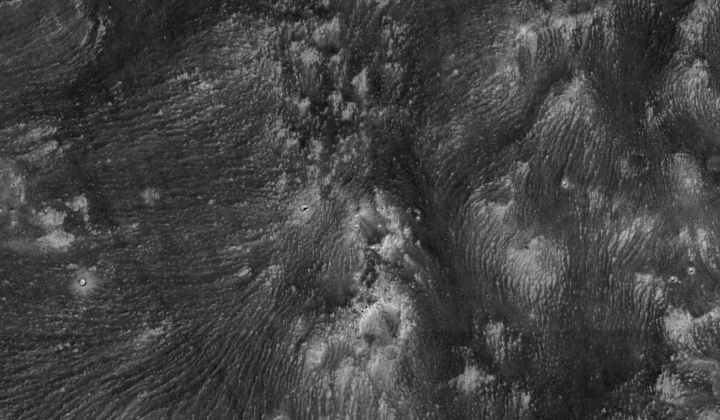
Resembling a Fingerprint
According to НВ — Техно: In the Dedalia Planum region of Mars, researchers have uncovered unusual, elongated curved lines of boulders that form a pattern strikingly similar to a human fingerprint. These formations were captured in images taken by the HiRISE camera aboard NASA's Mars Reconnaissance Orbiter in August 2024. The area studied spans roughly 5 by 15 kilometers, with boulders spaced about 5 to 10 meters apart. Dedalia Planum itself rises approximately 5,455 meters above Mars’ baseline surface level.
Exploring Possible Origins
Planetologist Paul Geisler from the U.S. Geological Survey analyzed the images and pointed out that nothing like these patterns has been observed elsewhere on Mars. The origin of these boulder arrangements remains a mystery, but scientists have proposed two main theories:
- One idea suggests that cycles of freezing and thawing could sort the soil in a way that produces similar patterns, a process seen in Earth's colder regions.
- The other hypothesis links the formations to marsquakes and a phenomenon analogous to the Brazilian nut effect, although there is currently no evidence that Dedalia Planum experiences strong enough freeze-thaw cycles or seismic activity to support this explanation.
It is also unclear if seismic activity in the nearby Tharsis region is sufficient to create such aligned boulder rows.
Research into this extraordinary phenomenon is ongoing, with the scientific community eagerly awaiting new findings that may shed light on these unusual surface structures on the Red Planet.
Discovering such distinctive formations on Mars holds significant potential for advancing our understanding of the planet’s geological history. Studying the boulders in Dedalia Planum could reveal how temperature fluctuations and seismic forces shape Martian landscapes. These insights may also provide valuable clues about the planet’s past climate and geologic activity, deepening our knowledge of the environmental conditions that once existed on Mars.
As researchers continue to investigate the enigmatic boulder formations in Dedalia Planum, recent discoveries of hydrogen chloride near Alba Mons hint at potential volcanic activity on Mars. This finding raises questions about the planet's geological processes, suggesting that the same forces shaping the boulders could be linked to volcanic phenomena, opening new avenues for exploration and understanding of the Martian environment.

Read also