GigaAI Unveils SeeLight S1, China’s First Household Humanoid Robot

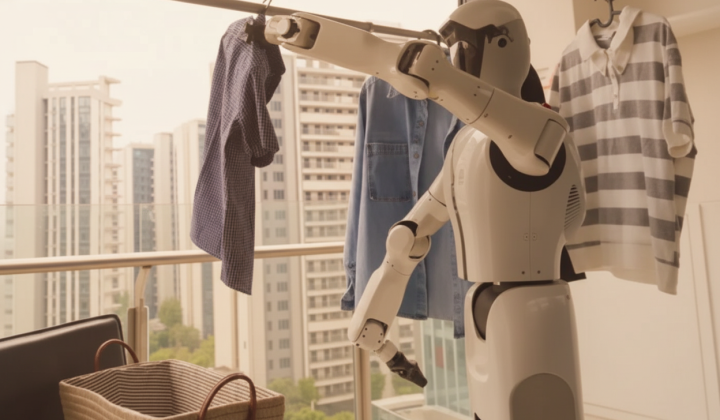
Launch of the SeeLight S1 Humanoid Robot
According to Главком: Chinese company GigaAI has introduced the country’s first general-purpose household humanoid robot, the SeeLight S1. Powered by artificial intelligence, this innovative device is scheduled to debut in a residential complex for high-tech industry workers by the end of May 2026, with an initial rollout of 100 units. GigaAI’s CEO, Zhu Zheng, believes the SeeLight S1 marks a significant milestone in the evolution of the home robotics market.
Key Features and GigaAI’s Roadmap
The SeeLight S1 is a two-armed robot mounted on a wheeled platform, featuring a collaborative control system. This mechanism automatically locks the robot’s movements when children or pets are nearby, enhancing safety for home use. In the first half of 2027, the company plans to distribute robots free of charge to families in Wuhan, the capital of Hubei province, for testing purposes.
- GigaAI aims to reduce the retail price of the SeeLight S1 to under 100,000 yuan (approximately $14,700) by June 2027.
- Company leadership anticipates a commercial and technological breakthrough in the household robot market by 2028.
- The launch of the world’s first fully automated mass-production facility for humanoid robots, where a new unit will roll off the assembly line every 30 minutes.
This initiative comes alongside news of the Phantom MK-1 humanoid robots, delivered to Ukraine in February. Developed by U.S.-based company Foundation, co-founded by Mike Leblanc, the Phantom MK-1 robots are part of a broader trend. According to Leblanc,
“Ukraine has become one of the key testing grounds for new military technologies.”
The development of humanoid robots like the SeeLight S1 underscores the growing role of automation in everyday life, potentially transforming household management. The adoption of advanced manufacturing techniques, such as fully automated production lines, could significantly impact the home robotics market by making these devices more affordable for a wider audience. As competition among manufacturers intensifies, it is likely to spur further innovation and improve product quality in this rapidly evolving field.

Read also