Chinese Lunar Samples Reveal Why Moon’s Near and Far Sides Differ Geologically

An Unusual Lunar Structure Explained
According to НВ — Техно: Scientists have uncovered the reasons behind the stark contrasts between the Moon’s near and far hemispheres. Samples collected by China’s Chang’e-6 mission from the far side have provided new insights into the Moon’s internal makeup. The differences arise from uneven tidal heating and magma circulation within the Moon’s early magma ocean following its tidal locking with Earth.
Insights from Chang’e-6 Samples
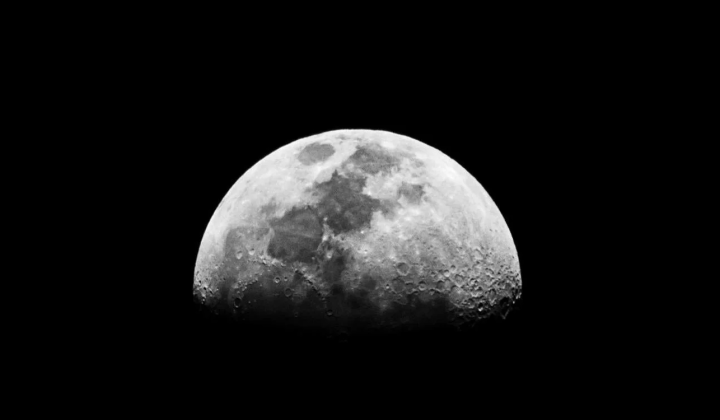
Chang’e-6 returned with lunar rocks that shed light on the Moon’s geological composition. While the side facing Earth is dominated by expansive dark volcanic plains, the far side consists mainly of ancient highlands. Notably, the crust on the far side is much thicker than that of the near side, a key factor in understanding their disparity.
Under the leadership of Professor Heqiu Hui from Nanjing University, researchers analyzed anorthosites, Mg-series rocks, and basalts from the Moon’s far side. These were compared with samples from the Apollo missions and China’s Chang’e-5 mission, both collected from the near side. Their findings showed that the Moon’s mantle beneath both hemispheres shares a similar composition, and the far side basalts from Chang’e-6 originate from a depleted mantle source comparable to that of Apollo basalts.
Crucially, while the Mg# values (magnesium number) in samples from both sides are similar, far side anorthosites exhibit higher maximum Mg# values and increased magnesium content. Additionally, Mg-series rocks on the far side have lower concentrations of rare earth elements and reduced thorium-to-samarium ratios.
The study suggests that the early lunar magma ocean cooled and solidified in a relatively symmetrical manner initially. However, because the Moon is tidally locked to Earth, the near side experienced stronger tidal heating when the two bodies were closer, leading to a thicker, magnesium-rich crust on the far side. Residual melts migrated toward the near side, concentrating elements like potassium, rare earth elements, and phosphorus (collectively known as KREEP).
Therefore, the differences between the Moon’s hemispheres are not due to mantle composition but result from material movement within the early magma ocean after tidal locking. These discoveries open new avenues for understanding the Moon’s evolution and will assist future missions exploring not only the Moon but other celestial bodies as well.
This research underscores the importance of international collaboration in space exploration. Decoding the geological contrasts between the lunar near and far sides enriches our knowledge of planetary formation and the early solar system’s dynamics, offering valuable context for comparative planetology.
Understanding the geological differences between the Moon's hemispheres not only sheds light on its history but also ties into broader mysteries of celestial impacts. Recent findings, particularly those from the far side, could provide valuable context for analyzing how asteroids have influenced lunar evolution. For a deeper dive into how these lunar samples have unlocked secrets about asteroid impacts, check out this insightful article on the implications of lunar research on asteroid mysteries.

Read also