Putin's Goal to Divide the Alliance: Analysis from Former U.S. Security Advisors on Ukraine

Geopolitical Events of 2026 Under Discussion
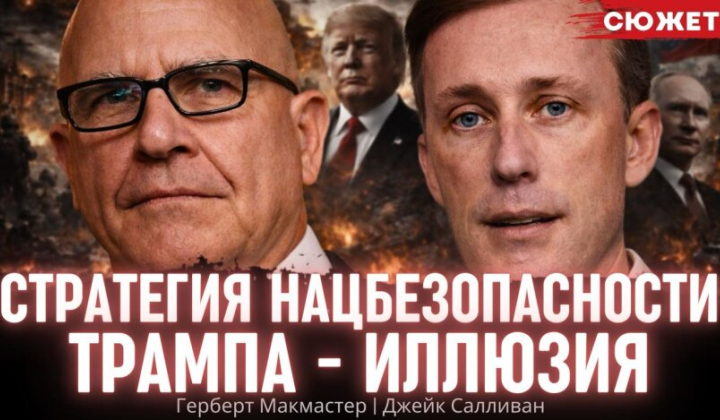
According to ХВИЛЯ: In a World Class podcast recorded at Stanford University, former U.S. National Security Advisors H.R. McMaster and Jake Sullivan analyzed the key geopolitical developments of early 2026. Their conversation centered on the new U.S. National Security Strategy, shifting priorities regarding Russia and China, and how the situations in Ukraine, Taiwan, Iran, and Venezuela are impacting transatlantic alliances. This discussion offers a rare glimpse into how top-level strategic thinking evolves between administrations.
Core Arguments from the Discussion
H.R. McMaster, a retired U.S. Army lieutenant general and National Security Advisor under President Trump, pointed out that the new National Security Strategy, released in December 2025, barely mentions Russia as a threat, while China is referenced only on page 19 of the 30-page document. The podcast also covered other critical developments, including:
- U.S. military action in Caracas that resulted in the capture of Venezuelan President Nicolás Maduro;
- Assessments on the likelihood of military strikes against Iran, which McMaster rated at 80% and Sullivan at 60%.
Jake Sullivan, National Security Advisor under President Biden, noted that Trump, unlike his predecessors, is unwilling to commit to defending Japan against China, raising doubts about U.S. reliability. McMaster emphasized Ukraine's critical importance, stating that Putin aims to exploit divisions within the Western alliance to impose ceasefire terms unacceptable to Ukrainians and Europeans. Sullivan added that while initial military actions were often framed as supporting protesters, the focus has now shifted to using coercion to secure a nuclear deal.
The geopolitical analysis extended to other vital issues, such as the ongoing process to sell $20 billion in arms to Taiwan and the increase in defense spending by Scandinavian and Baltic nations to 5% of GDP. McMaster stressed the need to communicate that problems arising abroad become far more costly once they reach American shores, and that preventing a war is always more economical than fighting one.
The podcast dialogue underscores significant shifts in U.S. foreign policy with profound implications for international stability. The diminished focus on Russia in the new security strategy suggests a major recalibration of priorities, even as the situations with China and Ukraine remain pivotal for alliance cohesion. The rising military expenditures in regions bordering Russia indicate a hardening of defensive postures in response to persistent global threats.

Read also