Former Trump Envoy Outlines Strategy for U.S. to Force Putin to Seek Peace

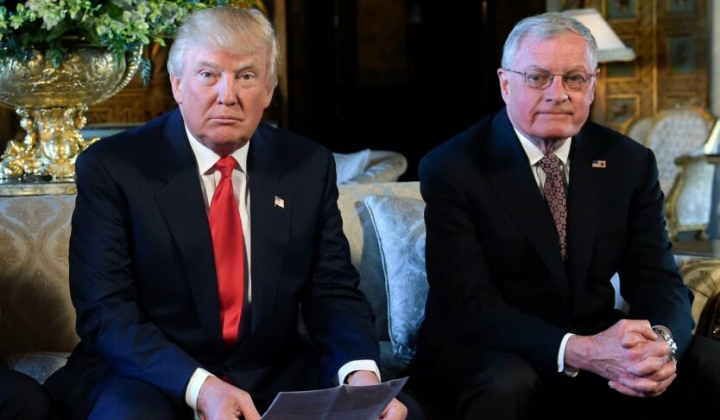
Keith Kellogg Criticizes U.S. Strategy on Ukraine War
According to ХВИЛЯ: In an interview with PBS, retired Lieutenant General Keith Kellogg, who served as a special envoy on Ukraine for former President Donald Trump, offered a pointed critique of the Trump administration's approach to the conflict. Kellogg compared its strategy to business deal-making. He noted that Russia's full-scale invasion of Ukraine is now entering its fifth year, with Russian casualties, by his estimate, reaching between 1.2 and 1.4 million killed and wounded. Kellogg also emphasized that Russian forces have failed to advance beyond their current positions, have not crossed the Dnipro River, and did not reach Kyiv.
Analyzing the frontline situation, Kellogg stressed that Ukraine needs an army of eight hundred thousand personnel, arguing that 'no army in Europe will match that in size.' He further suggested that the West's new security axis will likely run through Poland and Ukraine, extending down to Romania. Kellogg praised the extraordinary resilience of the Ukrainian people and called for the world to acknowledge their efforts:
'I've been in the hospitals, I've talked to the soldiers. You've got to take your hat off to them - for what they endure.' Keith Kellogg
Kellogg expressed the view that the United States possesses the leverage to compel Russian President Vladimir Putin to the peace table but is failing to utilize it. He underscored the importance of maintaining healthy skepticism in dealings with the Kremlin, stating, 'They don't have the military capacity to continue the offensive further.' The cited data on Russian losses and their stalled advance highlight the complex and grinding nature of the war.
Discussion of Trump-Zelenskyy Meeting
A significant part of the interview focused on the meeting between Trump and Ukrainian President Volodymyr Zelenskyy on February 28, 2025. Kellogg referenced a Pentagon order issued on January 26, 2025, to halt weapons transfers to Ukraine, a move that caused concern among many observers. He also pointed to economic factors, noting that Urals crude oil was trading at around $40 per barrel in late February 2026, and asserted that 'the main line of attack is the economy.' These comments come amid ongoing debates in Washington about the most effective means of supporting Ukraine.
Kellogg is not the only voice shaping perspectives on Ukraine. Steve Witkoff, a close friend of Trump, emphasized that Trump has always been 'absolutely straightforward' with him, while Kirill Dmitriev, head of the Russian Direct Investment Fund, acts as a key Kremlin negotiator on economic matters. Meanwhile, Kellogg observed that European nations are increasingly taking the lead in addressing the conflict, warning that 'if we're not careful, a year from now they'll go without us.'
Kellogg's criticism extends beyond U.S. policy on Ukraine to the broader context of international relations, where more countries are attempting to assume an active role in resolving global crises. His remarks may reflect shifting strategic priorities for the U.S. and its allies and underscore the critical importance of sustained support for Ukraine. The call for a significant expansion of Ukrainian armed forces suggests an expectation of a protracted conflict requiring stable international backing.

Read also