Former Ukrainian Ambassador Outlines Path for Regime Change in Iran

Potential Scenarios for a Shift in Power in Iran
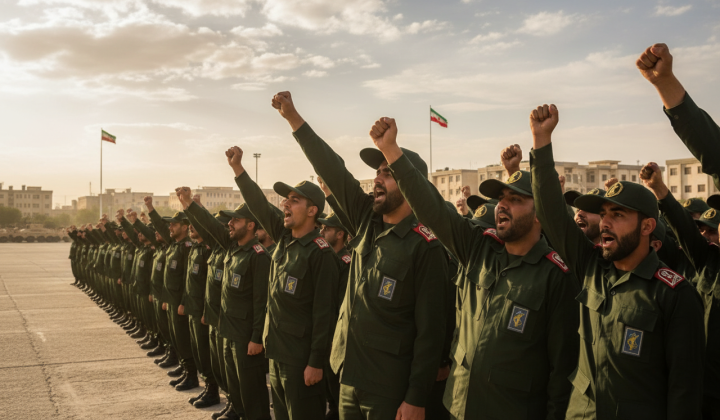
According to ХВИЛЯ: In an interview with political analyst Yuriy Romanenko, former Ukrainian Ambassador Serhiy Korsunsky shared his analysis of how power could change hands in Iran. He argued that altering the regime would likely require an internal coup and ground operations, not just airstrikes. Korsunsky detailed the structure of Iran's armed forces, highlighting the role of the Islamic Revolutionary Guard Corps (IRGC), a force of approximately 300,000 personnel tasked with suppressing domestic protests.
The expert explained that Iran effectively maintains two armies: the official national army and the IRGC. Korsunsky stressed that a genuine change in power must originate from within the country, and ideally, a full-scale civil war should be avoided to prevent civilian casualties and a protracted conflict.
From my perspective, the ideal scenario is a change of power, a change of regime, which should occur as a result of internal actions.
Serhiy Korsunsky
Korsunsky also noted that U.S. and Israeli intelligence resources are working to arm opposition groups, including Kurdish communities from Iraq, Iran, and Syria. He emphasized that 'no matter how many drones are deployed or how great the air superiority is, it ultimately comes down to people needing to enter the palace, throw out what's inside, and install or restore some form of authority.' This underscores the necessity of using proxy forces rather than direct American military involvement.
The Challenges of Overthrowing the Regime
Korsunsky linked the difficulties of changing Iran's government to what he described as 'religious fanaticism on an absolutely cosmic scale.' This creates significant additional obstacles and uncertainty in any process of civil authority transition. The expert added that, in his view, the United States, Israel, and Qatar have joined the operational efforts, indicating broad international interest in the Iranian situation.
Therefore, the situation in Iran remains complex. As Serhiy Korsunsky indicated, altering the regime may require substantial internal efforts coupled with active support from international players. Given the escalating tensions between Iran and the West, alongside persistent domestic unrest, developments within the country could have profound consequences for regional stability. The international community is closely monitoring the steps of key actors and the potential responses from Tehran.

Read also