Ukraine’s Healthcare Reform Called 'Social Cynicism' by Doctor Holubovska

Critique of Ukraine’s Healthcare System
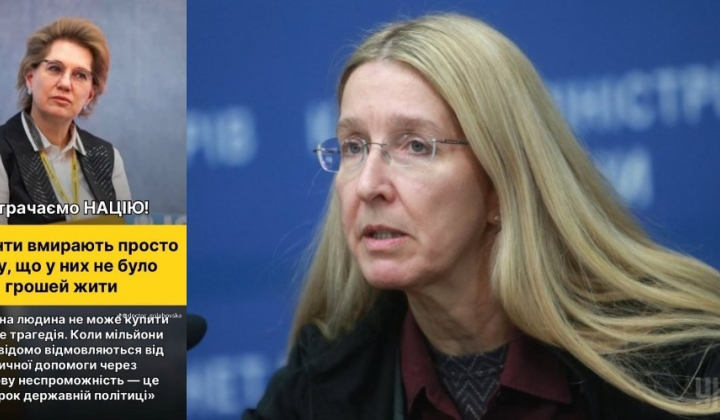
According to Radiotrek — Світ: On July 10, 2026, Radio Track published an op-ed by Dr. Olha Holubovska sharply criticizing Ukraine’s healthcare system. The article was later shared by Rivne-based physician Liubomyr Oleksiuk, a former head of the Rivne City Health Department and an activist with the People’s Movement of Ukraine. In her piece, Holubovska highlighted several critical issues, including the financial burden on patients, excessive bureaucracy, limited access to care in rural areas and district centers, and a growing distrust in the system, as people are often forced to pay out-of-pocket for medications and medical supplies.
Dr. Holubovska stated: 'Patients are dying because they cannot afford to live, and they do not believe they can handle the cost of treatment.'
She emphasized that the healthcare system imposes an enormous financial strain on patients, who must also navigate what she described as 'nine circles of bureaucratic hell.' Holubovska pointed out the difficulties faced by those living in villages and district centers when seeking care: 'Just to see a specialist, a person in a rural or district center has to endure virtual and real queues, find transportation, and travel dozens or even hundreds of kilometers to a “streamlined” hospital.'
Systemic Failures in Healthcare
The column also underscored that 'the system only remembers the patient when an ambulance arrives with someone in cardiogenic shock or with a terminal stage of cancer-not when the disease could have been detected early, treated in time, or prevented.' According to Holubovska, years of reforms have eroded public trust: 'People hear officials tout “free NHSU packages,” but when they enter a hospital, they again face the reality of having to buy everything-from syringes to expensive antibiotics.'
She noted that Ukrainians have developed a 'persistent psychological barrier'-the belief that 'seeing a doctor means huge expenses'-which leads many to delay medical visits until it is too late. Holubovska argued: 'You can rebuild hospital walls, purchase the latest CT scanners, and boast about launching another electronic app. But if patients are too afraid to step through the hospital door, then all that “reform” is not worth a single kopeck spent on its presentation.'
In conclusion, Holubovska stressed that poverty, combined with the rapid aging of Ukraine’s population, poses a serious threat to the nation’s health: 'This is an independent, leading risk factor for the health of the nation and a matter of national security.' She called on the state to address poverty and provide real support for the elderly, warning that until this happens, thousands of patients will continue to seek help too late.
Holubovska’s critique highlights the deep-seated problems within Ukraine’s healthcare system and underscores the urgent need for reform. The growing financial burden on patients, along with bureaucratic obstacles that hinder access to care, jeopardizes public health-especially in the context of an aging society. Her words may push authorities to reconsider priorities in healthcare to ensure more accessible and effective medical services for all citizens.

Read also