Teghaza 001 Meteorite from the Sahara Uncovers 4.1 Billion-Year History of Water and Zircons on Early Mars

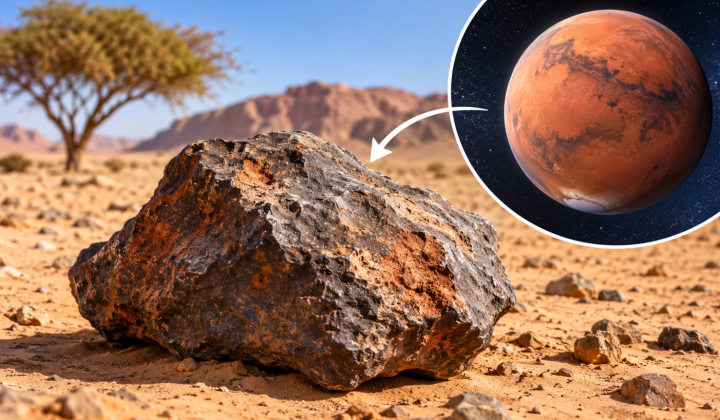
Researchers Unlock Secrets of a Unique Martian Meteorite
According to Radiotrek — Світ: Discovered in the Sahara Desert four years ago, the Teghaza 001 meteorite is a fragment of Martian rock dating back approximately 4.1 billion years. Its analysis has revealed that early Mars once harbored significant amounts of water. However, exposure to intense ultraviolet radiation caused much of this water to dissipate, with hydrogen escaping into space. Named after an ancient settlement near its discovery site in Mali, the meteorite shattered into eight pieces upon entering Earth's atmosphere.
Key Findings and Their Importance
Out of over 400 known Martian meteorites, only two are around 4.1 billion years old. Initially classified as a shergottite, Teghaza 001’s study revealed water molecules embedded within the mineral apatite, supporting the theory that water existed on early Mars. Additionally, zircon crystals found in the meteorite were dated using three different methods, confirming their ancient age.
This meteorite offers scientists a valuable glimpse into the geological history and atmospheric evolution of young Mars. The rock was ejected from the Martian surface by a collision with another celestial body before traveling through space and landing in the Sahara. Continued examination of Teghaza 001 is enhancing our understanding of Mars’ formation and transformation over billions of years.
Investigations into Teghaza 001 represent a major advance in exploring planetary evolution and the conditions that shaped Mars. Confirming the presence of water during the planet’s early development has profound implications for assessing Mars’ potential to have supported life. Furthermore, insights gained from this meteorite are crucial for guiding upcoming missions to the Red Planet, as knowledge of its geological past is essential for researchers and space exploration efforts.
In addition to the findings from Teghaza 001, another ancient Martian meteorite, Teg 001, has also provided significant insights into the presence of water and a warmer climate on Mars billions of years ago. This connection deepens our understanding of the planet's early environment and the potential for life.

Read also