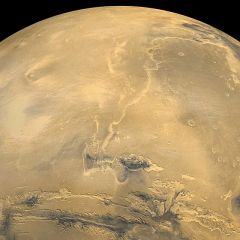
Volcanic Activity on Mars Indicated by Detection of Hydrogen Chloride Near Alba Mons

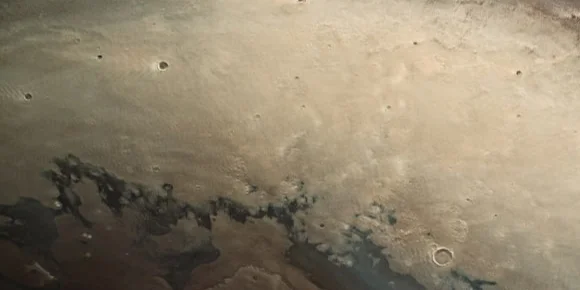
Hydrogen Chloride Found on Mars Near Alba Mons
According to НВ — Техно: Scientists have identified hydrogen chloride gas (HCl) close to the Alba Mons volcano on Mars during the planet's cold aphelion season, pointing to possible ongoing volcanic activity beneath its surface. This discovery is based on data collected by the European Space Agency's Trace Gas Orbiter, complemented by imagery from the HiRISE, CaSSIS, and CTX cameras. Researchers observed narrow fissures, measuring up to tens of centimeters wide and stretching for tens of kilometers along the topographic ridges near Alba Mons, which may serve as pathways for volcanic gases rising from magma chambers.
Gas Concentrations and Seasonal Emissions
Hydrogen chloride levels in the Martian atmosphere reach parts-per-billion concentrations. The estimated emission rate of HCl gas is less than 3 kilograms per second, significantly lower than typical volcanic gas flows on Earth, which range from a few to over 100 kilograms per second. However, during Mars’ perihelion, seasonal hydrogen chloride release can surge to around 180 kilograms per second. Due to the absence of tectonic recycling on Mars, volcanic outgassing remains the primary source contributing to the planet’s surface atmosphere.
The initial detection of hydrogen chloride on Mars was made in 2021 by the ExoMars orbiter, where the gas generation was initially attributed to dust storm activity. Hydrogen chloride consists of one hydrogen atom bonded to one chlorine atom. Scientists now believe that both magmatic processes and dust storms play roles in producing this gas on Mars.
"Just like on Earth, Mars’ chlorine cycle is driven by volcanic degassing from deep within the planet’s interior, sustained by subsequent volcanic eruptions." Nicholas Thomas
Kevin Olsen added:
"This marks the first confirmed detection of hydrogen chloride on Mars, representing the initial identification of a halogen gas in the Martian atmosphere. It reveals a new chemical cycle that requires further study." Kevin Olsen
These findings open new avenues for understanding Mars' atmospheric chemistry and volcanic processes.
The presence of hydrogen chloride on Mars could drastically reshape our view of the planet’s volcanic activity, suggesting that magmatic processes might still be active today. Ongoing exploration of Mars’ atmosphere and geology will continue to yield insights into past and present volcanic phenomena, which have played a crucial role in shaping its atmosphere. This breakthrough also highlights the value of missions like ExoMars, which are essential for unraveling Mars’ evolutionary history and assessing its potential to support life.
In addition to the intriguing findings near Alba Mons, recent observations reveal that every morning, a vast icy cloud forms over Mars' Arsia Volcano, extending more than 1800 kilometers. This phenomenon highlights the dynamic atmospheric processes occurring on the planet, suggesting a complex interplay between volcanic activity and climate. For more insights into this fascinating aspect of Martian geology, read about the icy cloud over Arsia Volcano.

Read also