Oil Spill After Shelling Leads to Mass Jellyfish Deaths in Odesa Region

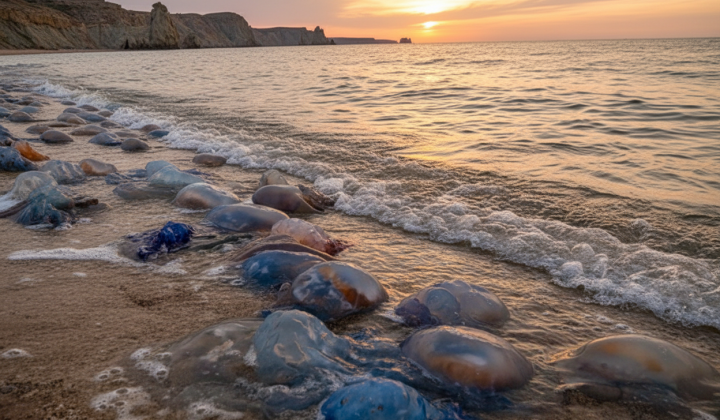
Mass Die-Off of Marine Life in Odesa Region
According to Главком: An oil leak triggered by a strike on the Chornomorsk port has caused a massive die-off of marine creatures within the Tuzly Estuaries National Nature Park in the Odesa region. The contamination of the sandy spit with vegetable oil covered more than 10 hectares. As a result, tens of thousands of dead jellyfish were found, with a total estimated weight of tens of tons.
Environmental Fallout and Response
The pollution followed an aerial attack on the Chornomorsk port on April 26. Additional contamination occurred when containers of flour and oil caught fire during an assault on the Pivdennyi port. To stop the spread, the port channel was sealed off with two layers of boom barriers.
Ecologists and specialists have voiced serious concerns over the environmental damage. Ivan Rusev, an environmental protection expert, stated:
“Based on a visual assessment, the vegetable oil pollution of the sandy spit within the national park covered an area of more than 10 hectares.”
Among the dead marine animals, the following jellyfish species were identified:
- moon jellyfish (Aurelia aurita)
- barrel jellyfish (Rhizostoma pulmo)
This incident highlights the severe ecological risks posed by military conflicts and the urgent need for cleanup efforts and natural resource protection. Authorities are monitoring the situation, and experts are calling for swift action to restore the Tuzly Estuaries ecosystem.
Marine pollution from warfare threatens not only biodiversity but also local economies reliant on fishing and tourism. The speed of ecosystem recovery-and the prevention of future incidents-will depend on how effectively environmental agencies and government bodies respond to this crisis.
The recent oil spill in the Odesa region is not an isolated incident; a previous Russian strike led to significant contamination of a protected reserve, raising alarms about the ongoing environmental crisis. This pattern of pollution underscores the urgent need for comprehensive measures to protect marine ecosystems and mitigate the impact of military actions on vulnerable habitats.

Read also