Deadly Chytrid Fungus Behind the 1970s Mass Frog Decline in Brazilian Forests

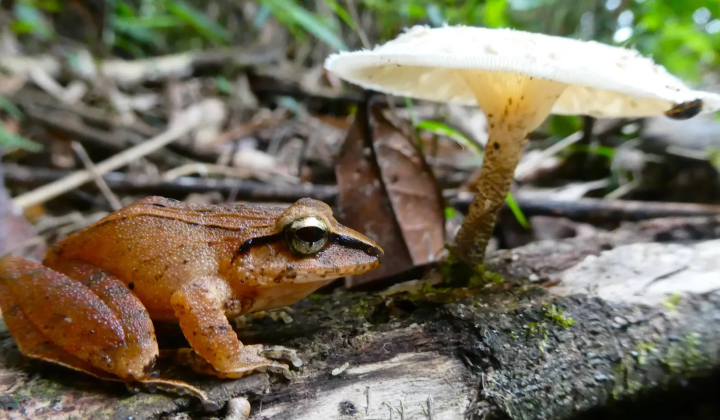
Frog Population Collapse in Brazil
According to НВ — Техно: Researchers from the United States have uncovered that a lethal fungal disease known as chytridiomycosis, caused by the fungus Batrachochytrium dendrobatidis, was responsible for the dramatic decline of frog populations in Brazil's tropical forests during the late 1970s. Their study focused on the Boracéia Biological Station within Brazil's Atlantic Forest, where frog numbers plummeted sharply between 1979 and 1982. The outbreak of the infection throughout the 1980s coincided with a significant drop in amphibian populations in this area.
Investigating the Fungus and Its Impact
Originating in Asia, Batrachochytrium dendrobatidis began spreading globally during the 1970s and 1980s, though it was officially identified as the causative agent of chytridiomycosis only in 1999. The team behind this research includes scientists from the Smithsonian National Zoo’s Center for Conservation Genomics, the Center for Species Survival, and Pennsylvania State University. They analyzed over 370 preserved frog specimens representing 17 species. Notably, samples collected before 1979 showed no signs of infection, whereas more than half of the specimens from the 1980s tested positive for the fungus.
The researchers observed that the species most affected by the outbreak had no detectable infections in the museum collections, suggesting that infected individuals may have died rapidly before being collected. As Jack Boyett explained:
“Species that didn’t experience population declines might have naturally carried the fungus without suffering mass mortality. Conversely, the most vulnerable species may have died so quickly that infected frogs were seldom captured by researchers.”
Follow-up surveys conducted between 2022 and 2024 in collaboration with the University of São Paulo revealed signs of recovery among most frog populations at Boracéia. Out of the 17 species cataloged, 12 were found still inhabiting the area, while the status of the remaining five remains uncertain. Although the fungal infection persists in the region, scientists plan to undertake further genetic studies, including DNA analysis from historical museum specimens and ancient environmental DNA, to better understand how some species have survived.
This work highlights the critical need to protect biodiversity and monitor disease outbreaks in wild populations, as such infections can drastically disrupt ecosystems. While the resurgence of frogs at Boracéia offers hope, the ongoing presence of the fungus underscores the importance of continued research and conservation efforts to safeguard these amphibians in the future.

Read also