How Menopause Halts the Age-Related Decline of Brain Grey Matter in Women

A Surprising Scientific Breakthrough
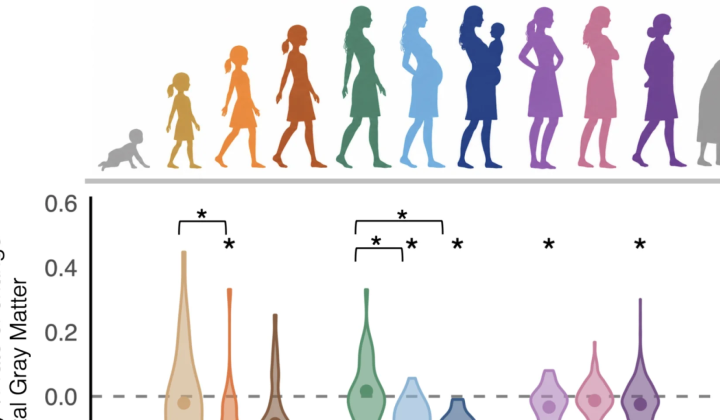
According to НВ — Техно: Contrary to common expectations, menopause appears to pause the typical age-related reduction in the volume of grey matter within the female brain. An extensive study utilizing magnetic resonance imaging (MRI) revealed that the onset of menopause interrupts the natural shrinkage of grey matter. This landmark research, which involved over 1,000 women at various life stages including puberty, pregnancy, and menopause, was published in the journal Nature Communications in 2026.
Brain Changes During Menopause
Normally, grey matter volume decreases as part of the brain’s aging process. However, the study found that the brain changes occurring during menopause are concentrated mainly in regions sensitive to estrogen. During menopause, levels of sex hormones such as estrogen and progesterone decline significantly.
Interestingly, the findings were consistent regardless of the women’s age, number of children, or use of hormone replacement therapy. Sophie van 't Hof, the study’s lead cognitive neurobiologist from Amsterdam University Medical Center in the Netherlands, remarked:
“It’s surprising that changes in grey matter throughout the brain during menopause had never been thoroughly investigated before, which motivated us to explore this area.” - Sophie van 't Hof
Historically, only 2-6% of neuroscience research has focused specifically on the female brain, with fewer than 5% taking biological sex into account as a variable. Earlier large-scale longitudinal studies concentrated primarily on the hippocampus, where accelerated tissue loss was documented. This new research suggests that menopause might temporarily slow down the typical age-related decline in cognitive functions.
Sophie van 't Hof also emphasized that “menopause should be understood less by what changes occur, and more by what it does not.”
These insights shed light on the remarkable plasticity of the female brain and highlight the urgent need for further investigation in this field.
The discovery that menopause influences grey matter volume carries important implications for women’s health and cognitive aging. By underscoring the critical role of sex differences in scientific studies, this work could inspire more research into how hormonal fluctuations impact brain plasticity. Ultimately, these findings may inform new approaches to preventing and treating cognitive decline in women during midlife.
Understanding the impact of hormonal changes on cognitive functions is crucial, especially considering how these shifts can influence various aspects of brain health. For instance, recent studies have shown that the integrity of white matter affects language abilities in older adults. Exploring these connections could provide deeper insights into the complex relationship between aging, hormonal fluctuations, and cognitive performance.

Read also