Why Kyiv's Skyscrapers Block the Path to Autonomous Mini-Boiler Rooms

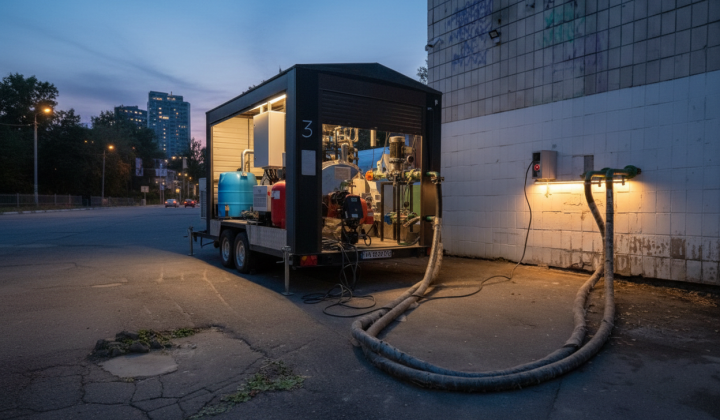
Kyiv's High-Rise Challenge: The Chimney Height Rule That Halts Energy Independence
According to ХВИЛЯ: A debate on the technical barriers preventing Kyiv's apartment blocks from switching to autonomous mini-boiler rooms has highlighted a major obstacle: the inability to meet chimney height regulations in the city's densely populated districts. This issue was the focus of a discussion on Oleg Popenko's YouTube channel PRO, featuring utility expert Oleg Popenko and Kostiantyn Funzhyi, a master's student at the Kyiv School of Economics. The push for decentralized heating comes as Ukrainian cities seek greater energy resilience and efficiency.
The primary technical hurdle discussed revolves around environmental emission standards. Specifically, a mini-boiler room's chimney must be taller than the highest adjacent building. In Kyiv, where 25-story residential towers are common, this presents a formidable challenge. The participants noted that buildings of 16 to 25 stories are the norm in these areas, making the implementation of such boiler room projects extremely difficult.
Oleg Popenko: 'We cannot install a boiler room with a chimney that is shorter than the multi-story buildings next to it.'
This restriction is a key factor stalling the development of autonomous heating. The expert added that 'it is physically impossible to build a 3-4 megawatt mini-boiler room and run a chimney up, I don't know, 16 stories, 50 meters high.' In his view, this combines numerous technical, cost, and other factors, complicating the situation further. Popenko considers the idea 'utopian,' arguing that decentralizing heat supply for high-rises 'isn't even worth looking into.'
The Future Prospects for Mini-Boiler Rooms
Consequently, the question of implementing mini-boiler rooms in the capital's high-rises remains unresolved, and for now, such projects in Kyiv seem highly unlikely. Districts like Pozniaky and Oskorky may have no prospects for autonomous heating until these technical limitations are overcome. This situation underscores the complex trade-offs between modernizing infrastructure and adhering to strict urban safety and environmental codes.
The discussion of these technical barriers emphasizes the critical importance of considering existing urban infrastructure when planning new energy supply systems. Amid rapid urban growth and an increasing need for autonomous solutions, a balance must be found between environmental norms and the practical realities of implementing such technologies. It remains an open question whether city planners can find ways to overcome these challenges to ensure a sustainable heat supply for residents.

Read also