Cabinet Members Share Personal Stories Behind Their First Embroidered Shirts

Vyshyvanka Day: A Celebration of National Identity
According to Главком: On May 21, Ukrainians observe Vyshyvanka Day, a holiday that has become a powerful emblem of cultural heritage. The occasion encourages reflection on the traditions of Ukrainian embroidery and its enduring significance in people's lives. To mark the day, Ukraine's Ministry of Culture collected firsthand accounts from government officials about their first embroidered shirts, highlighting how this traditional garment remains relevant in modern society.
Officials Recall Their First Vyshyvankas
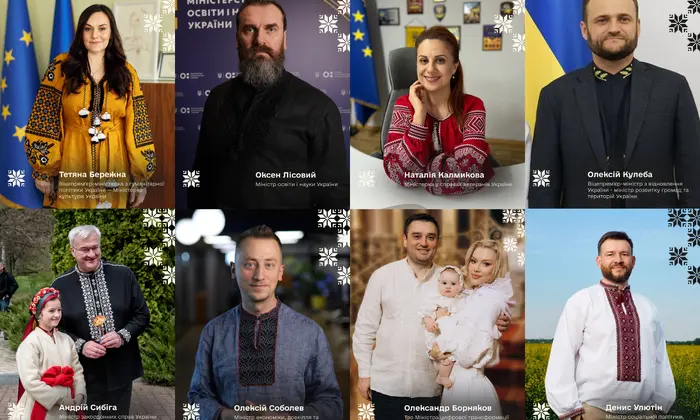
Oksen Lisovyi, the Minister of Education and Science, recalled that his earliest photograph in a vyshyvanka and embroidered vest dates back to 1973, when he was just one year old. The vest, a gift to his mother from Ukrainian dissident Oksana Meshko, is still kept by his family. Lisovyi emphasized:
“Every nation needs ways to distinguish 'us' from 'them,' and ethnoculture-of which Ukrainian embroidered clothing is a part-serves as one such marker.” - Oksen Lisovyi
Culture Minister Tetiana Berezhna shared that she wore her first vyshyvanka on her first day of school. Her shirt blends elements from Chernihiv and Poltava regions, with Hutsul motifs inherited from her father's side. Berezhna noted:
“In our family, the vyshyvanka was always part of life’s most important moments: christenings, holidays, Sunday trips to church.” - Tetiana Berezhna
Foreign Affairs Minister Andrii Sybiha underscored the deep meaning of the vyshyvanka in Ukrainian life. He said his primary embroidered shirt was made by his mother, and over time, these garments became essential for his family: “It’s about memory, the connection between generations, and things that stay with you no matter where you are.”
Veterans Affairs Minister Nataliia Kalmykova mentioned that she wears items produced by veteran-run businesses, as they represent not just clothing but the stories of people who have endured war. “The vyshyvanka has always remained a symbol of unity, family memory, and Ukrainian identity,” she stated.
Communities and Territories Development Minister Oleksii Kuleba recounted receiving his first vyshyvanka as a wedding gift from his wife. “There is always something deeply personal in a vyshyvanka-family, history, symbols passed down through generations,” he stressed.
Economy Minister Oleksii Sobolev said his first vyshyvanka came after the Revolution of Dignity. “It was the first year after those events, and I wanted to have something traditional, something Ukrainian,” he explained.
Acting Digital Transformation Minister Oleksandr Borniakov also shared that he bought his first vyshyvanka in Lviv, emphasizing its importance in his wardrobe. Social Policy, Family, and Unity Minister Denys Uliutyn noted that his in-laws gave him his first vyshyvanka, and such shirts have since become a part of his family’s daily life.
The non-governmental organization 'Defense of the State' has proposed making Vyshyvanka Day an official state holiday, underscoring its significance for Ukrainians. In Kyiv, bronze sculptures of the city’s infant founders on Poshtova Square were dressed in vyshyvankas, while municipal workers decorated city parks with flowerbeds shaped like patriotic patterns.
Vyshyvanka Day is celebrated on the third Thursday of May, highlighting the embroidered shirt as a symbol of Ukrainian culture, national identity, and the resilience of the Ukrainian people.
This year’s observance places a special emphasis on traditions and cultural heritage amid contemporary challenges. Interest in vyshyvankas and their symbolic meaning is growing both among Ukrainians and internationally. The holiday not only unites people around shared customs but also serves as a key element in shaping national identity during times of change.
As Ukrainians continue to celebrate their rich cultural heritage through traditional attire, the global recognition of unique embroidery styles, such as the Reshetylivka’s ‘White-on-White’ embroidery, showcases the enduring significance of these crafts. This not only emphasizes the importance of vyshyvanka in personal histories but also highlights its role as a cultural brand on the international stage.

Read also