Fastest Algorithm for the Four Color Theorem Developed by International Research Team Accelerates Map Coloring

Breakthrough Algorithm Advances the Four Color Theorem
According to НВ — Техно: An international group of researchers has created the fastest known algorithm to solve the Four Color Theorem, first proposed in 1852. This innovative approach dramatically speeds up the process of coloring maps of any size, reducing computation time from quadratic to linear complexity. Beyond cartography, this breakthrough holds promise for numerous other applications.
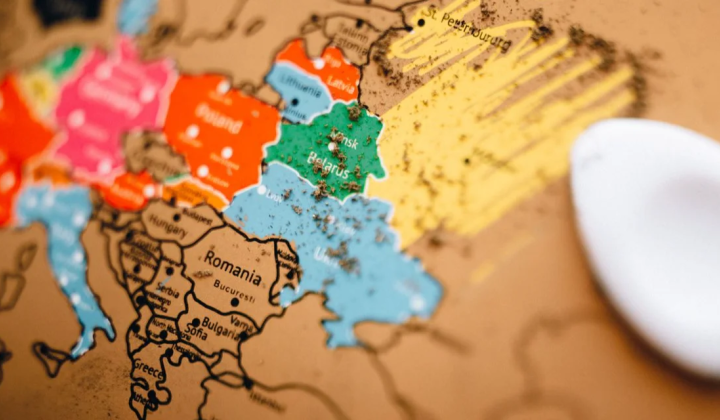
The Four Color Theorem states that any map drawn on a plane or sphere can be colored using no more than four colors so that no two adjacent regions sharing a boundary have the same color. Originally formulated by English mathematician Francis Guthrie in 1852, the theorem was fully proven only in 1976. A simplified proof released in 1997, however, required extensive processing time for large datasets, limiting its practical use.
Key Advantages of the New Method
The newly developed algorithm identifies 'reduced configurations'-specific patterns on the map that serve as starting points for calculations. This insight enabled researchers to cut computation times down from quadratic to linear. As researcher Carsten Thomassen explained:
"Graphs contain numerous such 'handles.' This discovery allowed us to reduce the computation time from quadratic to linear." - Carsten Thomassen
For example, increasing the number of regions on a map by a factor of ten now results in only a tenfold increase in processing time, whereas older algorithms slowed down by a factor of one hundred.
The findings were presented at the IEEE symposium and published on arXiv. By representing maps as graphs composed of points and connections, this technique also extends to three-dimensional surfaces with holes, akin to a lifebuoy or a slice of Swiss cheese. As Mikkel Thorup noted:
"Previous methods merely proved the possibility of such coloring but were slow when assigning colors to specific regions." - Mikkel Thorup
This advancement could revolutionize map coloring techniques across various fields.
Besides improving cartography, the new algorithm has significant potential in scientific and technological areas requiring rapid processing of large datasets. This includes fields such as computer graphics and network optimization, where graph coloring plays a crucial role. Progress in this domain may lead to innovations in telecommunications, data processing, and beyond.

Read also