A Major Warm Spot Detected Deep Beneath Mars' South Pole

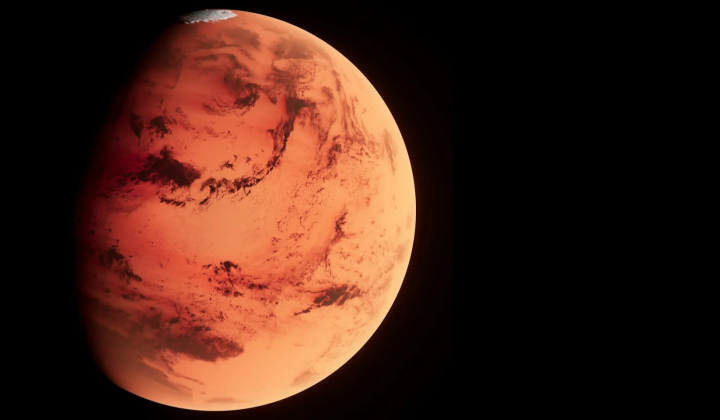
The Red Planet's Interior Is Running Hot
According to НВ — Техно: A research team led by Alexander Bern at the University of Arizona has uncovered signs of a pronounced heat irregularity deep under Mars' south pole. The announcement came on August 27 at 21:04. By applying tidal tomography to gravity data gathered by the Mars Global Surveyor, Mars Odyssey, and Mars Reconnaissance Orbiter missions, the scientists determined that the deep southern hemisphere is about 200–400 °C hotter than the planet's northern half and is partially molten. Although the Martian surface appears cold and desolate, these findings suggest that the interior may still be surprisingly restless.
What the Landscape and Measurements Reveal
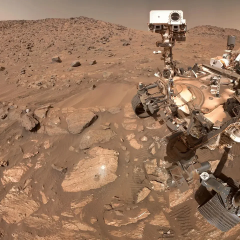
Mars has a striking north-south divide: low plains dominate the north, while the south is covered with high mountains and deep craters. The InSight lander also recorded stronger scattering of seismic waves in the southern region, which may be connected to the anomaly. Furthermore, local magnetic deviations have been spotted in iron-bearing minerals on Mars.
"Knowing the temperature regime deep underground is essential if we want to reconstruct the planet's water-related history."
Amirhossein Bagheri
Published in the journal Nature, the findings put forward several possible explanations for the unusual heat. These include:
- a massive asteroid impact in the distant past,
- distinctive convection behavior in the southern mantle,
- dense geological formations that trap heat and keep it from rising.
Bagheri further explained that the warming of the southern mantle may have directly influenced the creation of basins that once contained liquid water, potentially offering favorable conditions for life. The discovery raises fresh questions about Mars' geological evolution and whether the planet could have supported living organisms. It could also reshape our understanding of past internal processes, guide future searches for liquid water, and sharpen the focus of upcoming Mars exploration missions.
These findings not only shed light on the current state of Mars' interior but also connect to the planet's watery past. Recent studies have revealed that liquid water may have existed on Mars for hundreds of millions of years longer than previously thought, indicating a more complex geological history that could have implications for the potential for life on the planet.

Read also