Rare Lorikeet Photographed on Buru Island for the First Time in 12 Years

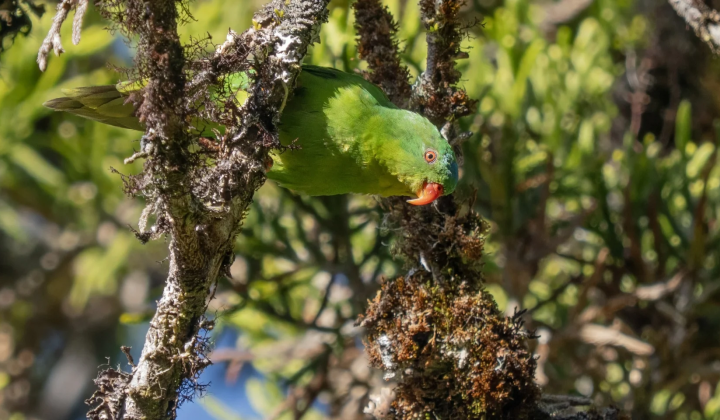
Rediscovery of the Buru Lorikeet
According to НВ — Техно: The Buru lorikeet (Charmosynopsis toxopei), a bird found only on Indonesia's Buru Island, has been spotted again by an expedition from an Indonesian climbing group. This marks a major milestone: the species was photographed for the first time in twelve years, and researchers also captured the first audio recordings of its high-pitched calls. For nearly 90 years, the lorikeet remained virtually unknown, known only from museum specimens collected in the 1920s and a single photograph taken in 2014.
During the expedition, at least nine individuals of this species were observed, representing a crucial step forward in studying the Buru lorikeet. “No other bird on the island resembles a lorikeet, so when we saw them, we knew immediately what they were,” said John Mittermeier, one of the expedition members. The species is listed as Data Deficient on the IUCN Red List. In 2024, the Search for Lost Birds organization declared the Buru lorikeet a lost species.
Significance of the Research
The Search for Lost Birds is a global partnership involving American Bird Conservancy, Re:wild, and BirdLife International. Participating in such projects is vital for conserving rare species like the Buru lorikeet. Research on this bird was conducted under extremely challenging conditions, characterized by steep limestone terrain, cliffs, sharp boulders, and a lack of water. As James Eaton noted,
“rain, uneven limestone, river currents, and the absence of trails meant that anyone trying to reach the summit needed a very good-or crazy-reason to even attempt it.”
The Buru lorikeet was first described from seven specimens collected in the 1920s. Despite remaining unknown for decades, these new observations and recordings open fresh avenues for its study and conservation. The importance of such discoveries cannot be overstated, as they help scientists better understand biodiversity and ecological changes occurring in regions where rare species live.
The rediscovery of the Buru lorikeet underscores the importance of preserving natural habitats and conducting research in conditions that can be extremely difficult. This finding may also spur further efforts to study and protect other rare bird species threatened by environmental changes and human activity. Such research not only expands scientific knowledge but also raises global awareness of the need to protect biodiversity.
The recent sightings of the Buru lorikeet highlight the ongoing efforts to rediscover and conserve species believed to be lost. In a similar vein, another remarkable bird, thought to have vanished for nearly a century, was recently located on the same island. This discovery underscores the importance of continued research and exploration in preserving biodiversity. For more details on this fascinating find, visit the story of a bird rediscovered after nearly a century.

Read also