Ultra-Fast Spectroscopy Could Enable US Missile Defense and Asteroid Research

Breakthrough in High-Speed Spectroscopy Technology
According to НВ — Техно: On June 11 at 6:30 PM, a newly developed high-speed spectroscopy technique is opening up fresh possibilities for analyzing light generated by supersonic impacts. The goal: to determine the chemical makeup of missiles and asteroids. This method is expected to become a critical asset for U.S. missile defense systems and could also significantly aid astronomers studying celestial objects.
At the core of this innovation is high-speed spectroscopy, which examines light from impacts lasting only a few microseconds. This allows for the instantaneous identification of the chemical composition of intercepted missiles and their payloads. Dr. Pablo Bueno, lead engineer at the Southwest Research Institute (SwRI), explained that
“the colossal energy of the impact forces materials to emit light at different wavelengths”
, making the technology extremely valuable for national security.
Experimental Studies and Findings
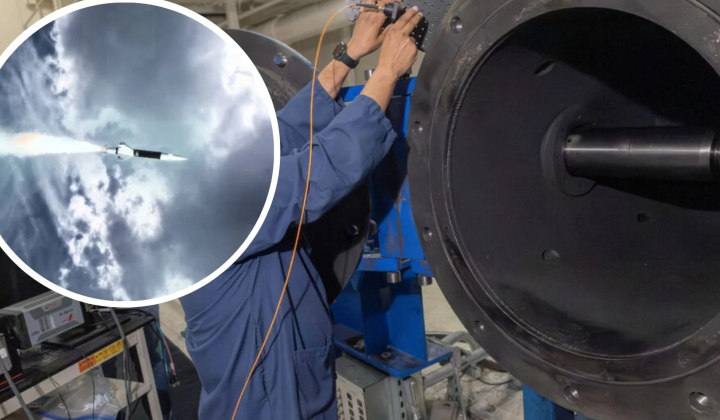
Research validating the new method was conducted using a 22-meter two-stage gas gun capable of accelerating projectiles to speeds of 7 kilometers per second. To simulate these processes, the team developed a laser launch system that ensures collision timing accuracy down to 100 nanoseconds. The experiments revealed how target thickness, atmospheric pressure, and temperature influence the resulting flash, underscoring the importance of controlled testing conditions.
Beyond missile defense, this technology could help astronomers determine the origins of meteorites and asteroids. Scientists also characterized the emission spectra of aluminum and copper with minimal error, demonstrating the high precision of the data collected. This breakthrough may serve as a major step forward for both military technology and astronomical research.
The adoption of high-speed spectroscopy has the potential to transform approaches to security and space exploration by enabling faster, more accurate identification of threats and new objects in space. This innovation is likely to attract interest from military and scientific institutions seeking improved analytical and defensive methods. Furthermore, such advancements could spur new research in materials science and physics.
In addition to advancing missile defense capabilities, this innovative spectroscopy technique could also play a crucial role in understanding cosmic phenomena. For instance, similar breakthroughs in predicting solar eruptions highlight how cutting-edge technology can enhance our grasp of both terrestrial and astronomical events, paving the way for more comprehensive research in both fields.

Read also