Scientists Decode Genome of Jonathan, the World's Oldest Land Animal at 194 Years

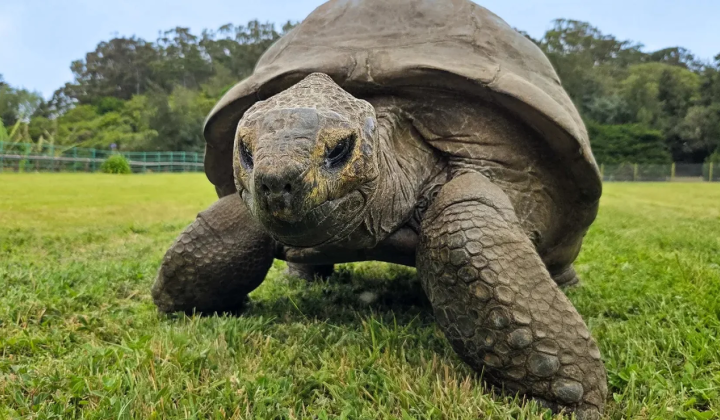
The Remarkable Longevity of Jonathan the Giant Tortoise
According to НВ — Техно: Jonathan, a giant Aldabra tortoise recognized as the oldest terrestrial animal alive, recently celebrated his 194th birthday-an extraordinary age that nearly doubles the typical lifespan of his species, which usually live up to 90 years. Researchers conducted a comprehensive genetic analysis of Jonathan, uncovering specific mutations linked to longevity, particularly within his mitochondria. These organelles are crucial for maintaining cellular energy balance and protecting cells from damage. The study was led by Dr. Steven Clark of the nonprofit Kallel Foundation, with findings published in the journal Science Advances.
Due to regulations set by the authorities on Saint Helena Island, scientists were unable to collect blood samples from Jonathan because of infection risks. Instead, they obtained cheek swabs, enabling them to compare Jonathan’s genome with those of younger tortoises. This comparison revealed 287 unique genetic variants associated with DNA repair and the safeguarding of chromosome telomeres, the protective caps at the ends of chromosomes.
Key Findings from the Study
The investigation also revealed that epigenetic markers within Jonathan’s mitochondrial molecules remained stable throughout his life, suggesting mechanisms that may contribute to his extended lifespan. Mitochondria are known for producing energy within cells and defending them from oxidative damage. However, Professor Vincent Lynch from the University at Buffalo cautioned against prematurely applying these findings to human medicine, stating:
"Jonathan might simply be exceptionally gifted at surviving old age." - Professor Vincent Lynch
Dr. Steven Clark also commented:
"I would never want to be the doctor responsible for accidentally ending the life of the planet’s longest-lived creature." - Dr. Steven Clark
While these insights represent a promising step toward understanding the biology of aging, translating them into human anti-aging treatments will require much more research and validation.
The study of Jonathan’s genome opens new avenues for exploring longevity mechanisms that could benefit both wildlife biology and human health. Scientists are hopeful that these discoveries will aid in developing therapies to slow down aging, but emphasize that more investigation is essential before practical medical applications can be realized.
Understanding the genetic factors that contribute to exceptional longevity, like those found in Jonathan, could provide insights into broader biological processes. For instance, recent research has unveiled a significant link between chronic inflammation and aging, shedding light on potential therapeutic approaches to mitigate age-related issues. Discover more about these groundbreaking findings in the field of aging here.

Read also