Researchers Achieve First Successful Testing of Underwater Perovskite Solar Panels at Depths up to 10 Meters

Breakthrough in Underwater Solar Energy
According to НВ — Техно: Scientists from Yunnan University have successfully demonstrated the operation of lead-based perovskite solar panels submerged in the South China Sea at depths reaching 10 meters. During a two-hour trial, these innovative panels managed to charge lithium-ion batteries, proving their capability to power underwater equipment. The devices are constructed from lead halide perovskite combined with the polymer polyhexamethylene guanidine hydrochloride, which enhances electron retention.
Performance and Practical Applications
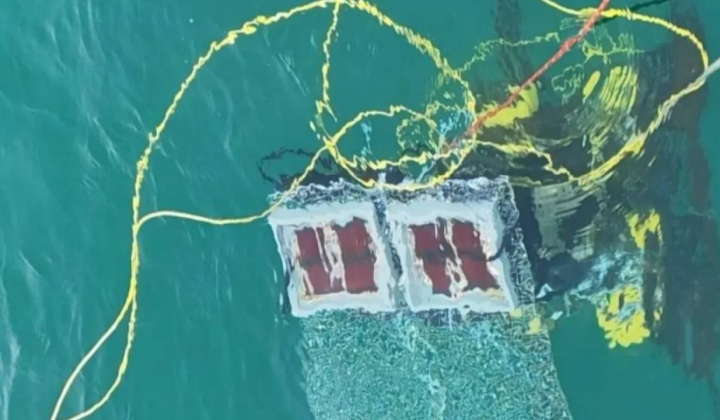
These solar cells are specifically tuned to capture blue-green light wavelengths (400−600 nm), which can penetrate seawater to depths of 5 to 10 meters. Laboratory simulations of oceanic conditions showed a conversion efficiency nearing 35%. Using remotely operated vehicles, panels measuring 115 cm² were deployed at 2, 6, and 10 meters near Weizhou Island. Energy harvested amounted to 1416 mWh at 2 meters, 752 mWh at 6 meters, and 324 mWh at 10 meters-enough to power an LED display.
The expected operational lifespan of these panels is approximately five and a half years. They hold promise for powering a range of underwater technologies including sensors, cameras, and communication systems.
Wen-Hua Zhang of Yunnan University stated, “This marks the first practical validation of submerged solar cells functioning effectively at depths close to 10 meters, greatly broadening their potential applications.”
For context, terrestrial solar power accounted for about 9% of global electricity generation in 2025. The findings from these underwater experiments were published in the journal Joule.
This advancement could significantly impact underwater technology by providing a renewable power source for marine devices. The ability to harness solar energy below the surface opens new avenues in oceanography, marine environmental monitoring, and subsea robotics, where reliable energy supply is essential. Ongoing research aims to refine the technology and boost its efficiency, potentially accelerating the adoption of renewable energy solutions in marine environments worldwide.
In a related development, researchers in South Korea have recently set a new global efficiency benchmark for tandem solar cells, demonstrating the rapid advancement of solar technology. This progress not only highlights the competitive landscape of solar energy research but also underscores the potential for innovative solutions in renewable energy. For more insights on this achievement, check out the full story on record-breaking efficiency in solar cells.

Read also