Dutch Schools Ditch Competition Between Students

The Dutch Approach to Child-Rearing and Schooling
According to Radiotrek — Світ: On August 31, 2026, Radio Trek published a feature about the Dutch education system, which emphasizes self-reliance, emotional comfort, collaboration, and responsibility rather than endless competition. The article, drawing on a Guardian report, offers a detailed look at how primary schools in the Netherlands work. This stands in sharp contrast to the test-driven, ranking-heavy environments familiar to many parents in English-speaking countries.
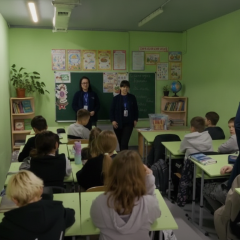
A child’s emotional state is considered essential to learning. In Dutch primary schools, especially those following the Jenaplan model, children of different ages share the same classroom. Older students help younger ones, and the roles flip the next year, building a natural sense of cooperation. Assessment is not about comparing students with each other: each child is measured against their own earlier progress. Stronger students receive more advanced materials, while those who need more time are not branded as worse.
Until age 12, children in Dutch primary schools typically have far less homework than students in many other systems. Free time after school is viewed as part of development, with play taking an important place. Dutch kids are expected to get around their known neighborhood independently and learn how to make agreements with others. Bicycles, in this context, act as something more than transportation; they are a core part of everyday life.
Swimming is treated as a practical safety skill, a sensible priority in a country full of canals, waterways, and dikes. In the Dutch educational model, vocational training is not seen as a backup for those who failed to enter university. That reflects a broader respect for different career paths and the value they bring.
In this system, child freedom is paired with responsibility and keeping promises. The main principles of the Dutch education model can be summarized as follows:
- The first thing a school asks is whether the child is doing well.
- Children learn together rather than constantly competing.
- The main comparison is with your own past self, not with another student.
- Mistakes are not treated as catastrophes.
- After school, a child has the right to simply play.
- Independence begins with everyday practical skills.
- Children are not encouraged to build their identity around status.
These principles may offer useful guidance for Ukrainian parents who want their children to grow up in a healthy and emotionally secure learning environment.
The Dutch emphasis on emotional well-being and cooperative learning could serve as a model for other nations, including Ukraine, where competition and results-oriented grading still prevail. Bringing similar ideas into practice may improve not only academic life but also reduce student stress, supporting children’s broader development and well-being.

Read also