Henri Kagan and Kenso Soai Honored with 2026 Nobel Prize in Chemistry for Breakthroughs in Asymmetric Synthesis and Autocatalysis

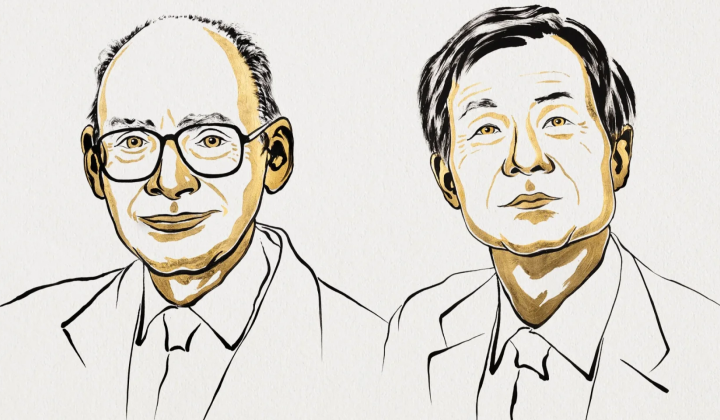
2026 Nobel Prize in Chemistry Recipients Announced
According to НВ — Техно: On October 7, 2026, the laureates of the Nobel Prize in Chemistry were revealed. This year, Henri Kagan and Kenso Soai were recognized for their pioneering work in asymmetric organic synthesis and the study of nonlinear effects and autocatalysis. Born in France in 1930, Henri Kagan is a professor at the University of Paris-Sud, while Kenso Soai, born in Japan in 1950, is affiliated with the Tokyo University of Science.
The Royal Swedish Academy of Sciences awarded the 2026 Nobel Prize in Chemistry for discoveries that enable producing a significant excess of one mirror-image form (enantiomer) in chemical reactions. Henri Kagan developed methods to control these processes, whereas Kenso Soai achieved the first chemical reaction yielding exclusively one enantiomer.
Background on the Nobel Prize in Chemistry
Since its inception, the Nobel Prize in Chemistry has been awarded 117 times. In 2025, the prize was shared by Susumu Kitagawa, Richard Robson, and Omar M. Yaghi for their work on metal-organic frameworks. The youngest recipient was Frédéric Joliot, who won at age 35 in 1935, while the oldest was John B. Goodenough, awarded at 97 in 2019 for his contributions to lithium-ion battery technology.
The achievements of this year’s Nobel laureates, Kagan and Soai, represent a major advancement in asymmetric organic synthesis, a field crucial to pharmaceutical development and the creation of new medicines. Their research promises to boost reaction efficiency and reduce manufacturing costs, marking important progress in chemical sciences with wide-reaching industrial and medical implications.
In addition to the remarkable achievements in chemistry, the 2026 Nobel Prize in Medicine has also been awarded for significant advancements in the field of optogenetics, which involves the innovative use of light to control nerve activity. This intersection of groundbreaking research highlights the ongoing evolution of scientific discovery and its implications across various disciplines. For more on this year's medical laureates and their contributions, see the full article on optogenetics and nerve control.

Read also