New Gemini South Data Reveal Chemical Parallels Between WASP-189b and Its Star

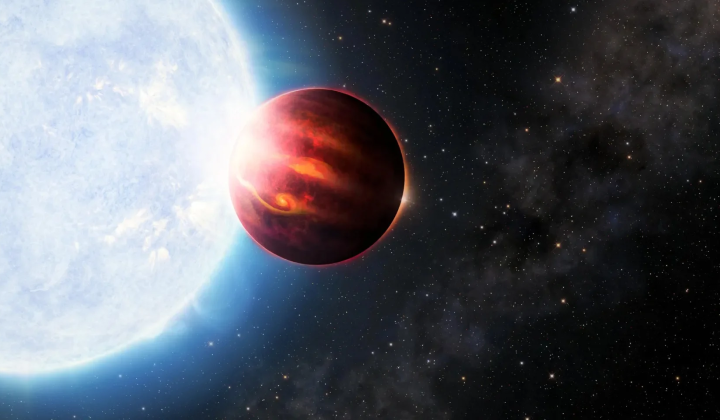
Exploring the Exoplanet WASP-189b
According to НВ — Техно: An international research team led by Jorge Antonio Sanchez has confirmed a chemical connection between stars and their orbiting planets through an in-depth study of the exoplanet WASP-189b. This breakthrough was achieved using the IGRINS infrared spectrograph mounted on the Gemini South telescope in Chile. Their findings reveal that the magnesium-to-silicon ratio in WASP-189b’s atmosphere matches that of its parent star, offering fresh insight into planetary formation processes across different stellar environments.
Significance of the Chemical Composition
Located approximately 320 light-years from Earth, WASP-189b orbits a white-blue star classified as spectral type A. For the first time in astronomical history, scientists have precisely measured the amounts of magnesium and silicon simultaneously in an exoplanet’s atmosphere beyond our Solar System. This milestone advances our understanding of planetary chemistry since stars and planets originate from gas and dust in protoplanetary disks surrounding young stars.
The chemical makeup of a planet’s outer layers preserves clues about the environment in which it formed. Until now, most research focused on materials from within our Solar System, with direct measurements from other star systems remaining elusive. The new data have important implications for astrobiology, including assessments of planetary internal structure, geological activity, and potential habitability.
On Earth, a well-balanced elemental composition supports plate tectonics, generates a magnetic field, and maintains stable cycles of materials in the atmosphere and oceans-key factors for sustaining life. Insights gained from studying WASP-189b could guide future investigations into similar planetary characteristics elsewhere, broadening our understanding of planetary systems and their potential to host life.
"This discovery highlights the critical role exoplanet research plays in unraveling the mechanisms shaping planetary systems and their capacity to foster life," said Jorge Antonio Sanchez.
Comparing the chemical profiles of stars and their planets may pave the way for new theories on planet formation beyond our Solar System, as well as aid in identifying exoplanets that might support life. The study of WASP-189b opens exciting avenues for continued astronomical observations and chemical analyses across diverse stellar systems.
As researchers continue to uncover the intricacies of planetary systems, another intriguing discovery involves a second-generation planet orbiting the white dwarf HS 0209+0832. This finding not only expands our understanding of planetary evolution but also highlights the diverse environments in which planets can exist. To learn more about this remarkable celestial body and its rapid orbit, you can read about it here.

Read also